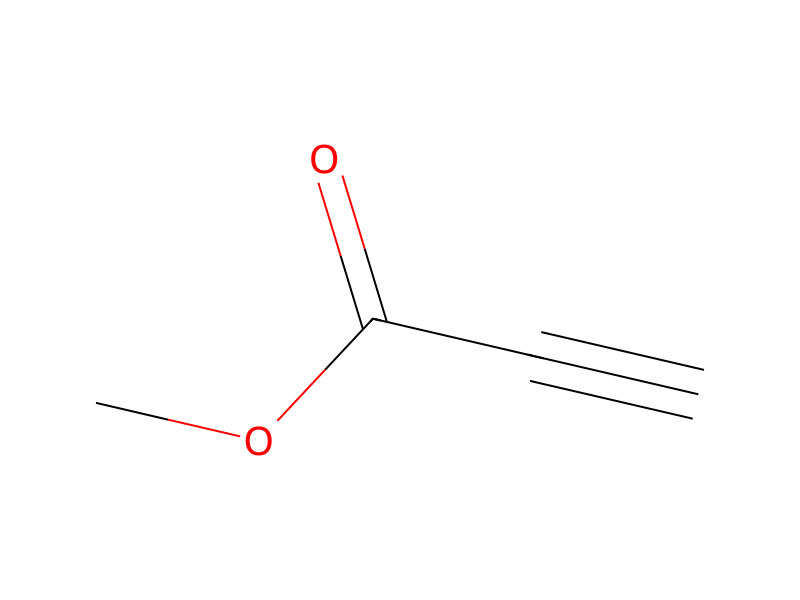
Methyl propiolate → 2-Hydroxy-7,8-dihydro-5(6H)-quinolinone
Reaction equation

[NH2:1][C:2]1[CH2:7][CH2:6][CH2:5][C:4](=[O:8])[CH:3]=1.[C:9](OC)(=[O:12])[C:10]#[CH:11]>>[NH:1]1[C:2]2[CH2:7][CH2:6][CH2:5][C:4](=[O:8])[C:3]=2[CH:11]=[CH:10][C:9]1=[O:12]Participants


Procedure
3-Aminocyclohex-2-enone (ex Aldrich) was reacted with methyl propiolate (ex Lancaster) to give 7,8-dihydro-2,5-quinoline-dione according to Speckamp et al J. Trav. Chem. Pays. bas., 91 157 (1972). The latter was converted to 2-chloro-7,8-dihydro-5-quinolinone by analogy with Example VI. The latter compound (2 g) was dissolved in chloroform (200 ml) and treated with bromine (0.53 ml) dropwise at room temperature. After 30 min solid potassium carbonate was added, the mixture was stirred for 1 hour, filtered and solvent removed to give 2-chloro-6-bromo-7,8-dihydro-5-quinolinone (2.86 g). This compound was heated at 110° C. with anhydrous lithium chloride (1.4 g) and dimethylformamide (45 ml) for 3 hours. The mixture was diluted with water, worked-up in conventional fashion and purified by column chromatography on silica (eluting with ether-hexane) to give 2-chloro-5-hydroxyquinoline (0.77 g).
Sources & evidence
- ORD record
- ord-38ce26baa79f4ed49cab1e951e932ae6
- Source dataset
- uspto-grants-1992_05
- Patent number
- US05114940
Reaction notes
Loading…