tert-Butanol → 4-(4-Trifluoromethylbenzyloxy)-2-picoline-N-oxide
Reaction equation

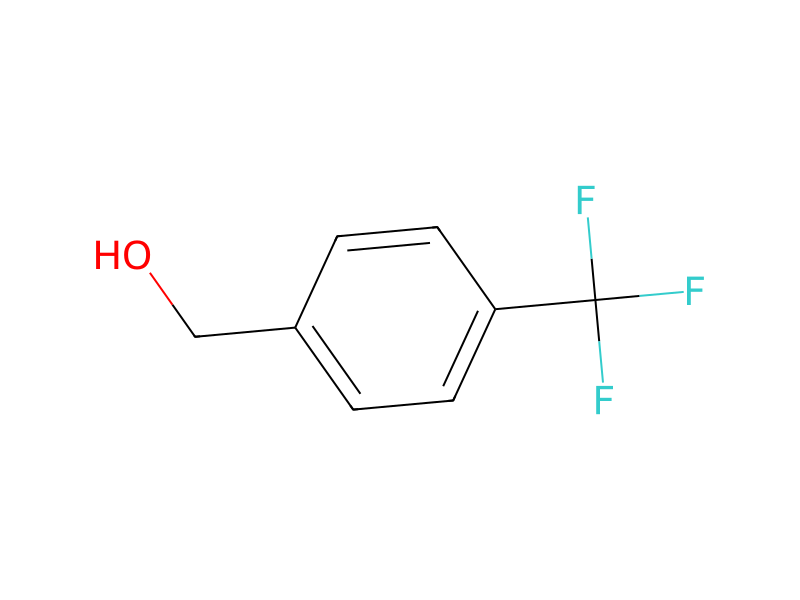
CC(C)([O-])C.[K+].[F:7][C:8]([F:18])([F:17])[C:9]1[CH:16]=[CH:15][C:12]([CH2:13][OH:14])=[CH:11][CH:10]=1.Cl[C:20]1[CH:21]=[C:22]([CH3:27])[N+:23]([O-:26])=[CH:24][CH:25]=1.C(O)(C)(C)C>O>[F:7][C:8]([F:17])([F:18])[C:9]1[CH:16]=[CH:15][C:12]([CH2:13][O:14][C:20]2[CH:21]=[C:22]([CH3:27])[N+:23]([O-:26])=[CH:24][CH:25]=2)=[CH:11][CH:10]=1Participants
6





Conditions
- Temperature
- 25 °C
Procedure
11.2 g (100 mmol) of potassium tert.-butoxide are added under an N2 atmosphere at 25° C. to 25 ml (183 mmol) of 4-trifluoromethylbenzyl alcohol. 7.2 g (50 mmol) of 4-chloro-2-picoline-N-oxide are subsequently added dropwise, then 10 ml of tert.-butanol are added, and the mixture is stirred for 1 hour at 25° C. and for 30 minutes at 75°-80° C. Water is then added and the mixture is extracted three times using dichloromethane, the extracts are dried and concentrated, and the residue is chromatographed on silica gel using dichloromethane/methanol. The product is obtained from the corresponding fractions, m.p. 113°-115° C.
Workup
- extractionthe mixture is extracted three times
- customthe extracts are dried
- concentrationconcentrated
- customthe residue is chromatographed on silica gel
- customThe product is obtained from the corresponding fractions, m.p. 113°-115° C.
Sources & evidence
- ORD record
- ord-d003ff1a25364c99998270b1ea6a741b
- Source dataset
- uspto-grants-1992_05
- Patent number
- US05114955
Reaction notes
Loading…