Water → 2,6-Diamino-7-tert-butoxy-7-oxoheptanoic acid
Reaction equation

[NH2:1][C@H:2]([C:8]([OH:10])=[O:9])[CH2:3][CH2:4][CH2:5][CH2:6][NH2:7].[CH3:11][O:12]S([O-])(=O)=O.[C:17](OC(OC1C=CC([S+](C)C)=CC=1)=O)([CH3:20])([CH3:19])[CH3:18].[OH2:34]>>[C:17]([O:9][C:8]([CH:2]([NH2:1])[CH2:3][CH2:4][CH2:5][C@@H:6]([C:11]([OH:12])=[O:34])[NH2:7])=[O:10])([CH3:20])([CH3:19])[CH3:18]Participants
4

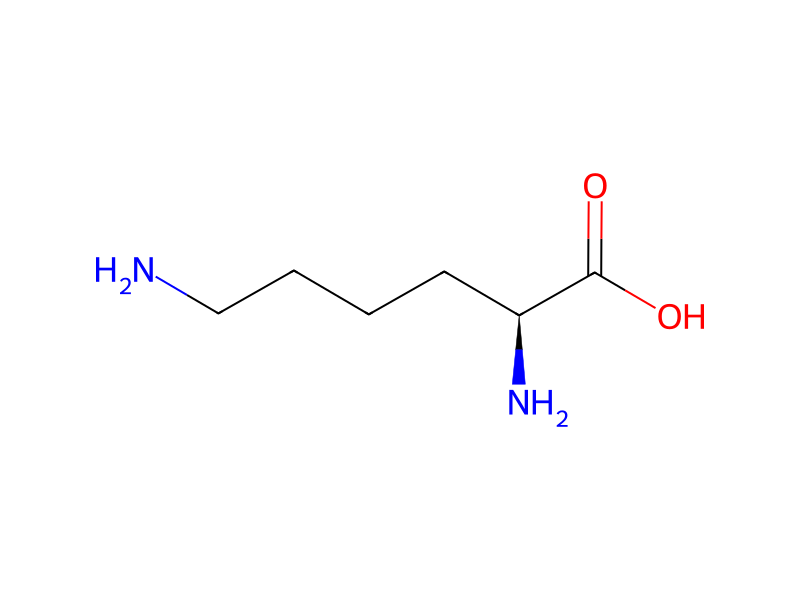


Conditions
- Temperature
- 20 °C
Procedure
A pH electrode was put in a solution of 14.6 g of lysine was dissolved in 100 ml of water, and 55 g (1.5 mol equivalent against lysine) of 4-tert-butyloxycarbonyloxyphenyldimethylsulfonium methylsulfate was added thereto under stirring at 20° C. The reaction was carried out at pH 8.0 according to the method of Working Example 10 to afford 17.7 g (72% of the theoretical value) of the desired product.
Sources & evidence
- ORD record
- ord-337a2ea71ef048ecac58832b05e4e67a
- Source dataset
- uspto-grants-1992_05
- Patent number
- US05117031
Reaction notes
Loading…