Water → HCID 19103907, compound
Reaction equation

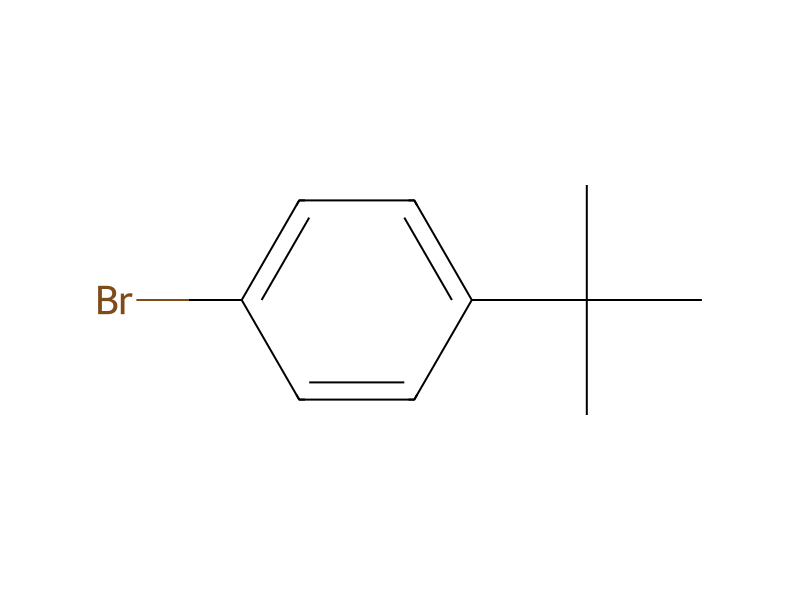
[C:1]([C:5]1[CH:10]=[CH:9][C:8](Br)=[CH:7][CH:6]=1)([CH3:4])([CH3:3])[CH3:2].C([Li])CCC.[C:17]1(=[O:22])[CH2:21][CH2:20][CH:19]=[CH:18]1.O>C(OCC)C.CCCCCC.C(C1C=CC(C2(O)CCCC2)=CC=1)(C)(C)C>[C:1]([C:5]1[CH:10]=[CH:9][C:8]([C:17]2([OH:22])[CH2:21][CH2:20][CH:19]=[CH:18]2)=[CH:7][CH:6]=1)([CH3:4])([CH3:3])[CH3:2]Participants







Procedure
A solution of 34 g of 4-t-butylphenylbromide (0.16 mole) in 50 ml diethyl ether was slowly added to a stirred mixture of 100 ml of a solution of n-butyllithium in hexane (1.6 mole/l) and 50 ml diethyl ether, while the temperature of the mixture was kept at -25 ° C. After completion of the addition, the temperature of the resultant mixture was allowed to rise slowly to about room temperature. Subsequently the temperature was decreased to -25° C. and 13.2 g of 2-cyclopentene-1-one (0.16 mole) dissolved in a small volume of diethyl ether was slowly added. The suspension thus obtained, was allowed to reach room temperature and then stirred for one hour. An excess amount of water was added to the suspension to result in 1-(4-t-butylphenyl)cyclopentanol. The 1-(4-t-butylphenyl)cyclopent-2-en-1-ol product was isolated from the reaction mixture by extraction with diethyl ether and subsequently purified by chromatography over silica, using dichloromethane as the elution solvent.
Workup
- customwas kept at -25 ° C
- additionAfter completion of the addition
- customto rise slowly to about room temperature
- customwas decreased to -25° C.
- additionwas slowly added
- customThe suspension thus obtained
- customto reach room temperature
Sources & evidence
- ORD record
- ord-9f5d92752c2f4e96a284553dfc04dbc0
- Source dataset
- uspto-grants-1994_01
- Patent number
- US05279999
Reaction notes
Loading…