Sodium Hydroxide → 1,1-Bis(4-pyrrolidinophenyl)ethylene
Reaktionsgleichung

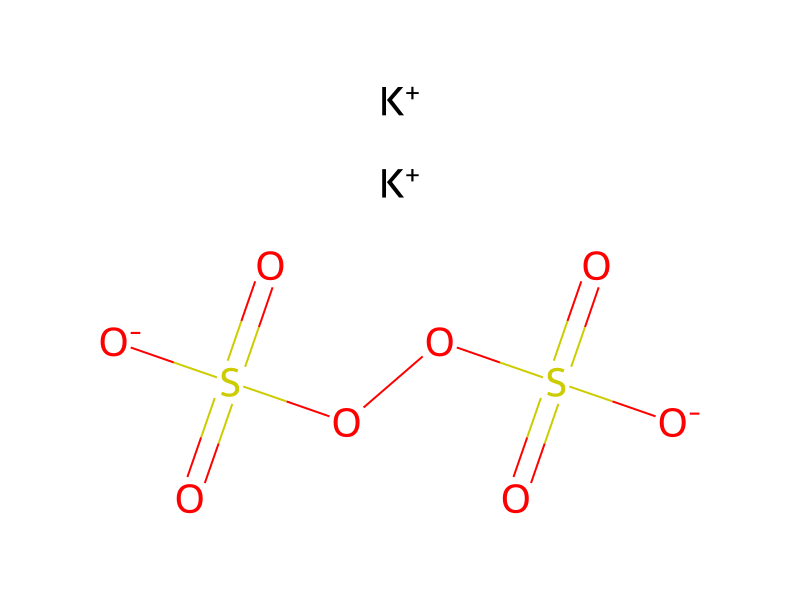
[OH-].[Na+].[N:3]1([C:8]2[CH:13]=[CH:12][C:11]([C:14]([C:19]3[CH:24]=[CH:23][C:22]([N:25]4[CH2:29][CH2:28][CH2:27][CH2:26]4)=[CH:21][CH:20]=3)(C)[C:15](O)=O)=[CH:10][CH:9]=2)[CH2:7][CH2:6][CH2:5][CH2:4]1.S(OOS([O-])(=O)=O)([O-])(=O)=O.[K+].[K+]>>[N:3]1([C:8]2[CH:9]=[CH:10][C:11]([C:14]([C:19]3[CH:24]=[CH:23][C:22]([N:25]4[CH2:26][CH2:27][CH2:28][CH2:29]4)=[CH:21][CH:20]=3)=[CH2:15])=[CH:12][CH:13]=2)[CH2:4][CH2:5][CH2:6][CH2:7]1Komponenten
4



Versuchsvorschrift
Into 100 ml of 5% aqueous solution of sodium hydroxide was dissolved 10 g of 2,2-bis(4-pyrrolidinophenyl)propionic acid. Thereto was added 9.2 g of potassium persulfate and the mixture was reacted with stirring for one hour. The resulting precipitates were collected by filtration and recrystallized from methanol to obtain 7.0 g (yield 80%) of 1,1-bis(4-pyrrolidinophenyl)ethylene, having a melting point of 221°~223° C.
Aufarbeitung
- customthe mixture was reacted
- customThe resulting precipitates
- filtrationwere collected by filtration
- customrecrystallized from methanol
Quellen und Nachweise
- ORD-Eintrag
- ord-165e42f6a8ea47228c4b8cb065e72432
- Quelldatensatz
- uspto-grants-1990_02
- Patentnummer
- US04898941
Notizen zur Reaktion
Wird geladen…