Dibutylamine → N,N-Dibutyl-2,2,2-trifluoroacetamide
Reaction equation

[F:1][C:2]([F:9])([F:8])[C:3]([O:5]CC)=O.[CH2:10]([NH:14][CH2:15][CH2:16][CH2:17][CH3:18])[CH2:11][CH2:12][CH3:13]>>[CH2:10]([N:14]([CH2:15][CH2:16][CH2:17][CH3:18])[C:3](=[O:5])[C:2]([F:1])([F:8])[F:9])[CH2:11][CH2:12][CH3:13]Participants

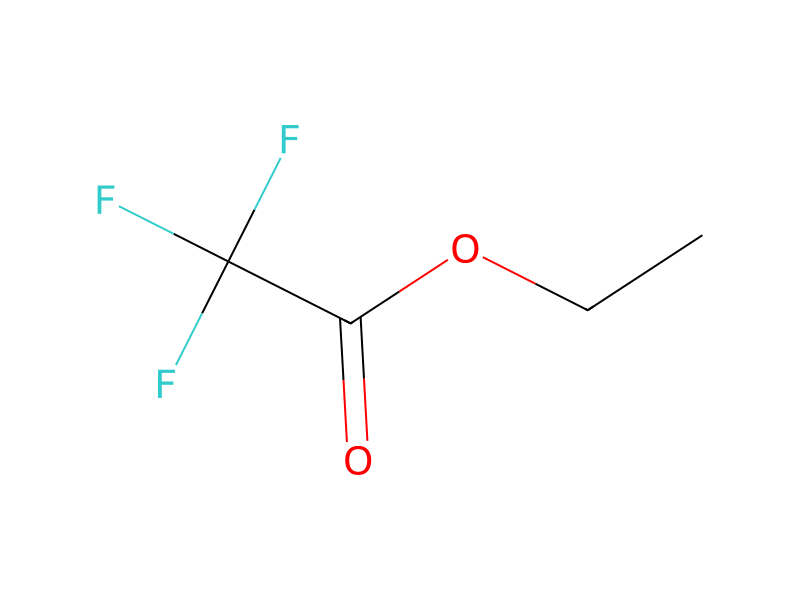

Procedure
Under a blanket of nitrogen, 2020.9 g (14.22 moles) of ethyl trifluoroacetate was charged to a 12-liter flask equipped with an overhead stirrer, an addition funnel, thermometer, and a condenser. To the stirred ethyl trifluoroacetate, 2015.0 g (15.59 moles) of dibutyl amine was added over a two hour period, during which the temperature of the stirred reaction mixture rose from 20° to 40° C. At the end of the addition period, the reaction flask was equipped with an 8 inch packed column and distillation head. The ethanol by-product was then removed by distillation with a maximum pot temperature of 135° C. The reaction mixture was then cooled and the product was isolated by distillation, boiling range 79°-87° C. at 2.2-3.2 mmHg. Yield 2850 g (89.0%).
Workup
- customequipped with an overhead stirrer, an addition funnel
- customthe temperature of the stirred reaction mixture
- customrose from 20° to 40° C
- additionAt the end of the addition period
- customthe reaction flask was equipped with an 8 inch
- distillationcolumn and distillation head
- customThe ethanol by-product was then removed by distillation with a maximum pot temperature of 135° C
- temperatureThe reaction mixture was then cooled
- customthe product was isolated by distillation, boiling range 79°-87° C. at 2.2-3.2 mmHg
Sources & evidence
- ORD record
- ord-ff80219e1fe447cfb47a0b99bffaec59
- Source dataset
- uspto-grants-1990_02
- Patent number
- US04899249
Reaction notes
Loading…