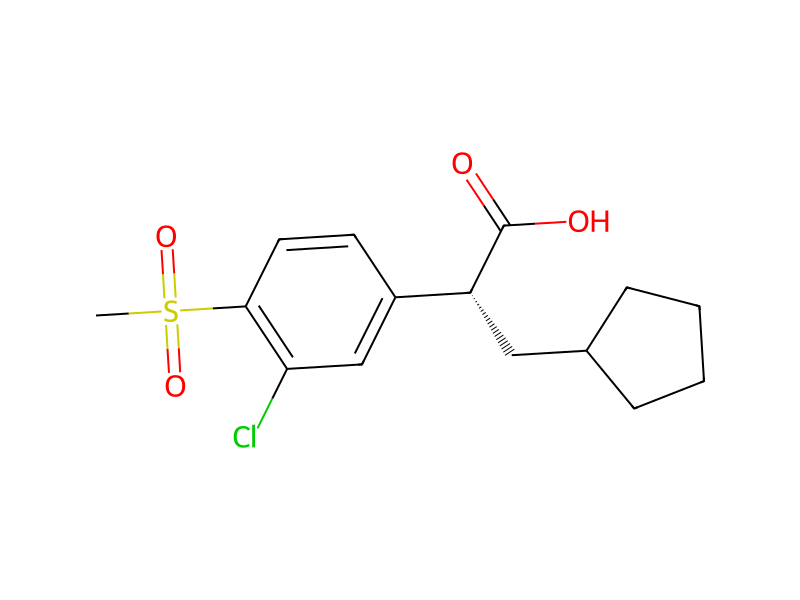
Hydrochloric Acid → 2(R)-(3-chloro-4-methanesulfonyl-phenyl)-3-cyclopentyl-N-[5-((S)-2,2-dimethyl-[1,3]dioxolan-4-yl)-pyrazin-2-yl]-propionamide
Reaction equation

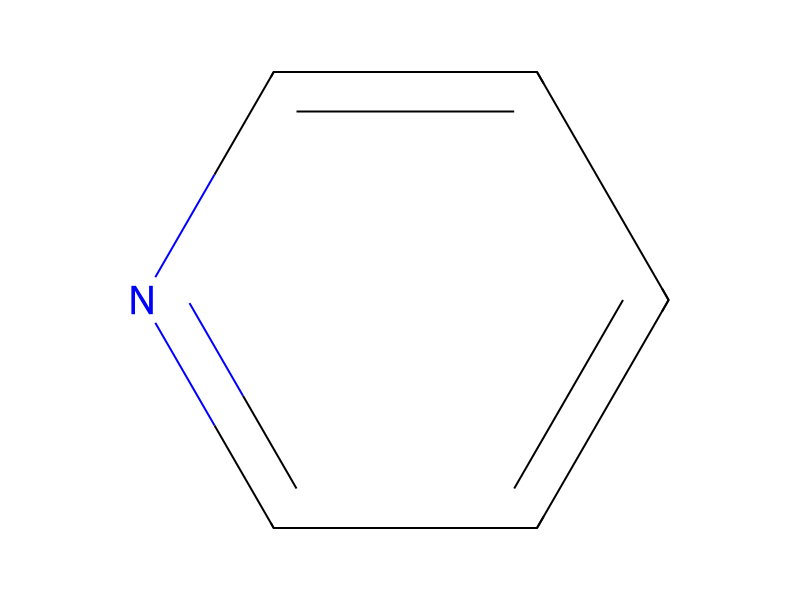
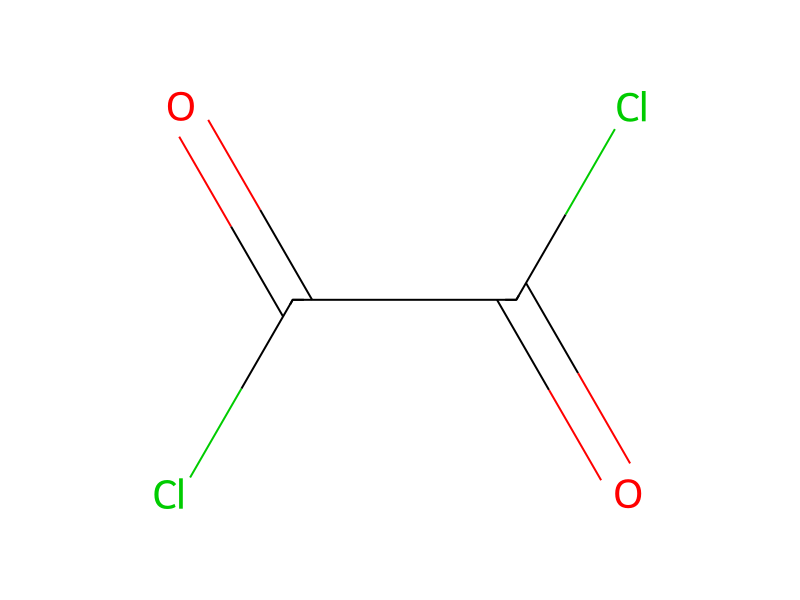
[Cl:1][C:2]1[CH:3]=[C:4]([C@@H:12]([CH2:16][CH:17]2[CH2:21][CH2:20][CH2:19][CH2:18]2)[C:13]([OH:15])=O)[CH:5]=[CH:6][C:7]=1[S:8]([CH3:11])(=[O:10])=[O:9].C(Cl)(=O)C(Cl)=O.[CH3:28][C:29]1([CH3:41])[O:33][C@@H:32]([C:34]2[N:35]=[CH:36][C:37]([NH2:40])=[N:38][CH:39]=2)[CH2:31][O:30]1.N1C=CC=CC=1.Cl>CN(C)C=O.C(Cl)Cl>[Cl:1][C:2]1[CH:3]=[C:4]([C@@H:12]([CH2:16][CH:17]2[CH2:21][CH2:20][CH2:19][CH2:18]2)[C:13]([NH:40][C:37]2[CH:36]=[N:35][C:34]([C@H:32]3[CH2:31][O:30][C:29]([CH3:41])([CH3:28])[O:33]3)=[CH:39][N:38]=2)=[O:15])[CH:5]=[CH:6][C:7]=1[S:8]([CH3:11])(=[O:9])=[O:10]Participants
Reactant 5

Product 1

Reagents, catalysts & solvents 2
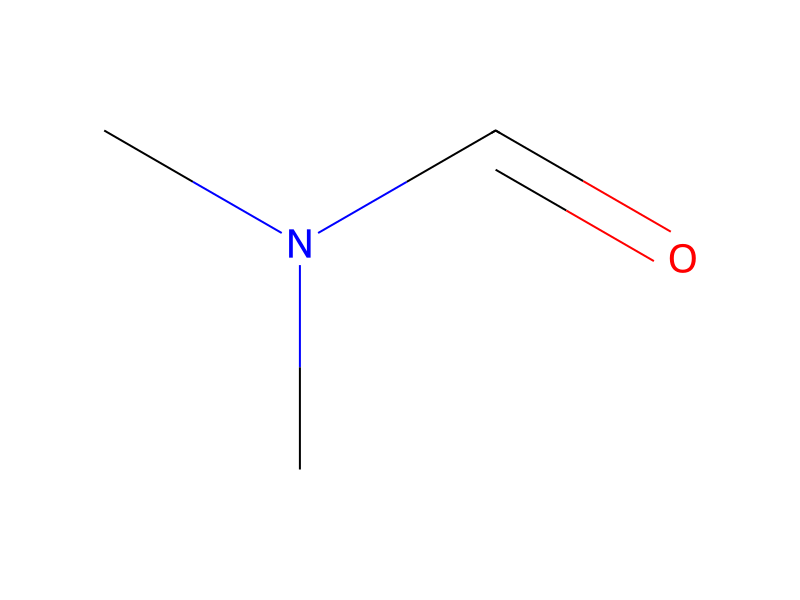
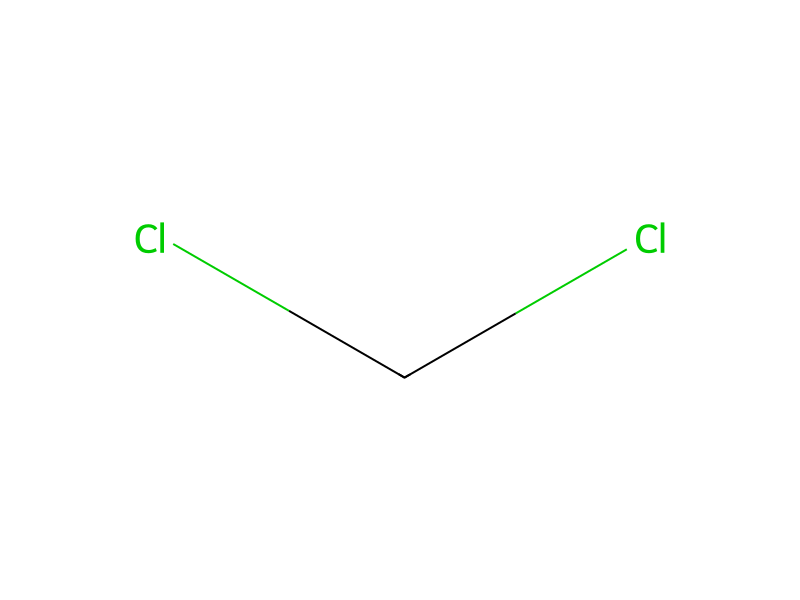
Conditions
- Temperature
- 25 °C
Procedure
A solution of 2(R)-(3-chloro-4-methanesulfonyl-phenyl)-3-cyclopentyl-propionic acid (prepared as in Example 1, 6.29 g, 19.01 mmol) and N,N-dimethylformamide (2 drops) in methylene chloride (70 mL) was stirred at 2° C. and then treated with oxalyl chloride (4.15 mL, 45.7 mmol). The mixture was stirred at 2° C. for 5 min and at 25° C. for 15 min. The reaction mixture was then concentrated in vacuo. The residue was dissolved in benzene (25 mL), and the evaporation was repeated. The resulting acid chloride was dissolved in methylene chloride (40 mL), cooled to at 0° C., and then treated with a solution composed of 5-((S)-2,2-dimethyl-[1,3]dioxolan-4-yl)-pyrazin-2-ylamine (3.65 g, 18.95 mmol), pyridine (4.6 mL, 56.9 mmol) and methylene chloride (40 mL). The mixture was stirred for 16 h without replenishing the cooling bath. The reaction mixture was then treated with a 1N aqueous hydrochloric acid solution (100 mL). The layers were separated, and the aqueous layer was extracted with methylene chloride (75 mL). The organic layers were washed with a saturated aqueous sodium bicarbonate solution (100 mL) and a saturated aqueous sodium chloride solution. The combined organic layers were dried over sodium sulfate, filtered, and concentrated in vacuo. Biotage chromatography (FLASH 40 L, Silica, 1/1 ethyl acetate/hexanes) afforded 2(R)-(3-chloro-4-methanesulfonyl-phenyl)-3-cyclopentyl-N-[5-((S)-2,2-dimethyl-[1,3]dioxolan-4-yl)-pyrazin-2-yl]-propionamide (8.9 g, 92%) as a white foam: (ES)+-HRMS m/e calcd for C24H30CiN3O5S (M+H)+ 508.1668, found 508.1671.
Workup
- concentrationThe reaction mixture was then concentrated in vacuo
- dissolutionThe residue was dissolved in benzene (25 mL)
- customthe evaporation
- dissolutionThe resulting acid chloride was dissolved in methylene chloride (40 mL)
- temperaturecooled to at 0° C.
- additiontreated with a solution
- stirringThe mixture was stirred for 16 h
- customThe layers were separated
- extractionthe aqueous layer was extracted with methylene chloride (75 mL)
- washThe organic layers were washed with a saturated aqueous sodium bicarbonate solution (100 mL)
- dry with materialThe combined organic layers were dried over sodium sulfate
- filtrationfiltered
- concentrationconcentrated in vacuo
Sources & evidence
- ORD record
- ord-ee129ff49d444468b0d5f9e3b6d54c78
- Source dataset
- uspto-grants-2010_06
- Patent number
- US07727750B2
Reaction notes
Loading…