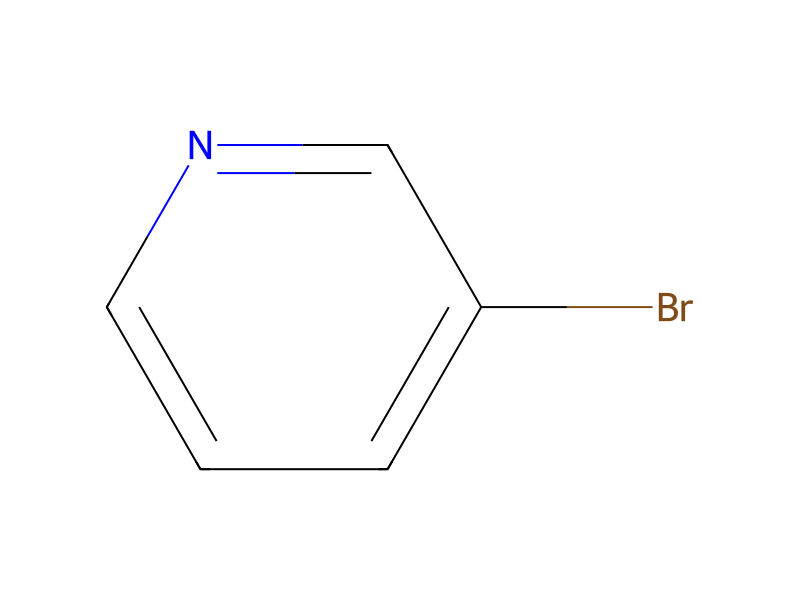
3-Bromopyridine → Ethyl 2-(4-chlorophenyl)-2-hydroxy-2-(3-pyridinyl)acetate
Reaction equation

Br[C:2]1[CH:3]=[N:4][CH:5]=[CH:6][CH:7]=1.[Cl:8][C:9]1[CH:14]=[CH:13][C:12]([C:15](=[O:21])[C:16]([O:18][CH2:19][CH3:20])=[O:17])=[CH:11][CH:10]=1.[Cl-].[NH4+]>C(OCC)C.C([Li])CCC>[Cl:8][C:9]1[CH:10]=[CH:11][C:12]([C:15]([OH:21])([C:2]2[CH:3]=[N:4][CH:5]=[CH:6][CH:7]=2)[C:16]([O:18][CH2:19][CH3:20])=[O:17])=[CH:13][CH:14]=1Participants





Procedure
To a solution of 3-bromopyridine (640 mg) in diethyl ether (10 ml), n-butyl lithium (2.5M-hexane solution, 1.80 ml) was added at −74° C. After 15 minutes' stirring at the same temperature, a solution of ethyl 2-(4-chlorophenyl)-2-oxoacetate (960 mg) in diethyl ether (100 ml) was added. The temperature of the system was raised to room temperature over 30 minutes, and to the reaction solution saturated aqueous ammonium chloride solution was added and extracted with diethyl ether. The organic layer was washed with saturated brine and dried over anhydrous sodium sulfate. The organic layer was condensed under reduced pressure, and the resulting residue was purified on silica gel column chromatography (hexane/ethyl acetate=3/2) to provide ethyl 2-(4-chlorophenyl)-2-hydroxy-2-(3-pyridinyl)acetate (571 mg) as a yellow oily substance.
Workup
- extractionextracted with diethyl ether
- washThe organic layer was washed with saturated brine
- dry with materialdried over anhydrous sodium sulfate
- customcondensed under reduced pressure
- customthe resulting residue was purified on silica gel column chromatography (hexane/ethyl acetate=3/2)
Sources & evidence
- ORD record
- ord-b6e31047605947038cdd2e34c6fc6eb3
- Source dataset
- uspto-grants-2010_06
- Patent number
- US07727998B2
Reaction notes
Loading…