Epichlorohydrin → Diglycidyl ether
Reaction equation

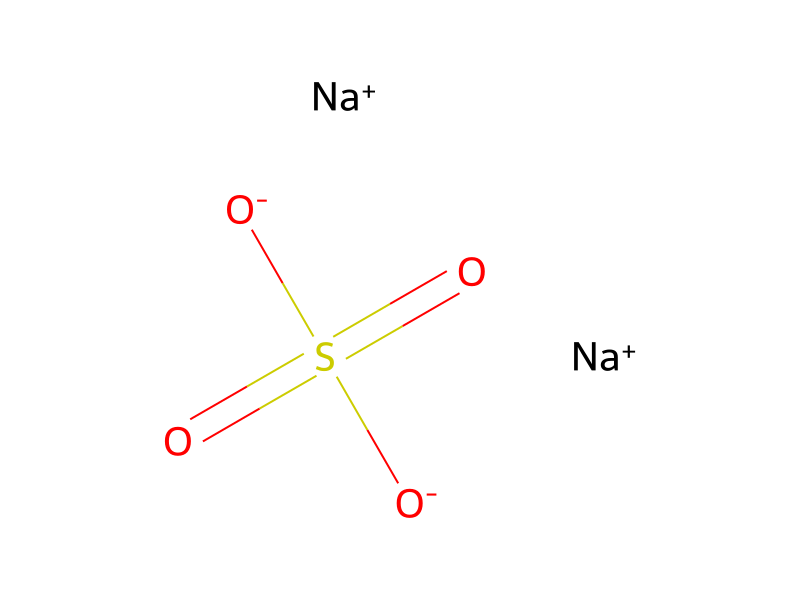
[CH2:1]([CH:3]1[O:5][CH2:4]1)Cl.[OH-:6].[K+].S([O-])([O-])(=O)=O.[Na+].[Na+]>>[CH2:1]([O:6][CH2:1][CH:3]1[O:5][CH2:4]1)[CH:3]1[O:5][CH2:4]1Participants



Procedure
Epichlorohydrin (160 ml, 2 mol, from Aldrich, Milwaukee, Wis.) and 4-diethylaminosalicylaldehyde 9-fluorenone azine (50 g, 0.14 mol, prepared as described above) were added to a 250 ml 3-neck round bottom flask equipped with a reflux condenser, a thermometer, and a mechanical stirrer. The reaction mixture was stirred vigorously at 35–40° C. for 7 hours. During this time, 26.8 g (0.4 mol) of powdered 85% potassium hydroxide and 6.8 g (0.05 mol) of anhydrous sodium sulfate (Na2SO4) were added in three portions with prior cooling of the reaction mixture to 20–25° C. After the termination of the reaction, the mixture was cooled to room temperature, and the unreacted solids were filtered off. The filtrate was extracted with diethyl ether and washed with distilled water until the washed water had a neutral pH. The organic layer was dried over anhydrous magnesium sulfate, treated with activated charcoal, and filtered. The solvents were removed and the residue was subjected to column chromatography (silica gel, grade 62, 60–200 mesh, 150 Å, Aldrich) using a mixture of acetone and hexane in a ratio of 1:4 by volume as the eluant. Fractions containing the product were collected, and the solvents were evaporated to yield an oily residue that was crystallized from a mixture of acetone and 2-propanol in a ratio of 3:1 by volume. The crystals were filtered off and washed with 2-propanol to yield 35 g (65%) of glycidyl ether of 4-diethylaminosalicylaldehyde 9-fluorenone azine. The melting point was found to be 135.5–136.6° C. The 1H NMR spectrum (100 MHz) of the product in CDCl3 was characterized by the following chemical shifts (δ, ppm): 9.1 (s, 1H, CH═N); 8.8 (m, 1H, Ar); 8.2 (d, 1H, 6-H of 1,2,4-subst. Ph); 8.1–7.2 (m, 7H, Ar); 6.5 (d, 1H, 5-H of 1,2,4-subst. Ph); 6.2 (s, 1H, 3-H of 1,2,4-subst. Ph); 4.5–4.2 (dd, 1H, one of OCH2); 4.2–4.0 (dd, 1H, one of OCH2); 3.6–3.3 (m, 5H, CH2N, CH); 3.0 (m, 1H, one of CH2 of oxirane); 2.8 (dd, 1H, one of CH2 of oxirane); and 1.2 (t, 6H, CH3). An elemental analysis yielded the following results in weight percent: C, 76.08; H, 6.31; N, 9.77, which compared with calculated values for C27H27N3O2 in weight percent: C, 76.21; H, 6.40; N, 9.87.
Workup
- customequipped with a reflux condenser
- temperaturewith prior cooling of the reaction mixture to 20–25° C
- customAfter the termination of the reaction
- filtrationthe unreacted solids were filtered off
- extractionThe filtrate was extracted with diethyl ether
- washwashed with distilled water until the washed water
- dry with materialThe organic layer was dried over anhydrous magnesium sulfate
- additiontreated with activated charcoal
- filtrationfiltered
- customThe solvents were removed
- additiona mixture of acetone and hexane in a ratio of 1:4 by volume as the eluant
- additionFractions containing the product
- customwere collected
- customthe solvents were evaporated
- customto yield an oily residue that
- customwas crystallized from a mixture of acetone and 2-propanol in a ratio of 3:1 by volume
- filtrationThe crystals were filtered off
- washwashed with 2-propanol
Sources & evidence
- ORD record
- ord-f27e71de0ebd4904b4b827054cc015ca
- Source dataset
- uspto-grants-2006_10
- Patent number
- US07115347B2
Reaction notes
Loading…