Allyl Isothiocyanate → Ethylenediamine
Reaction equation

[H-].[Al+3].[Li+].[H-].[H-].[H-].C1(C[CH:14]([NH2:17])[CH2:15][NH2:16])C=CC=CC=1.C(N1C=CN=C1)(N1C=CN=C1)=S.C([CH:37]1[CH2:41][NH:40][C:39](=[S:42])[NH:38]1)C1C=CC=CC=1.[CH2:43]([N:46]=[C:47]=[S:48])[CH:44]=[CH2:45]>>[NH:38]1[CH2:37][CH2:41][NH:40][C:39]1=[S:42].[NH2:16][CH2:15][CH2:14][NH2:17].[CH2:43]([N:46]=[C:47]=[S:48])[CH:44]=[CH2:45]Participants





Procedure
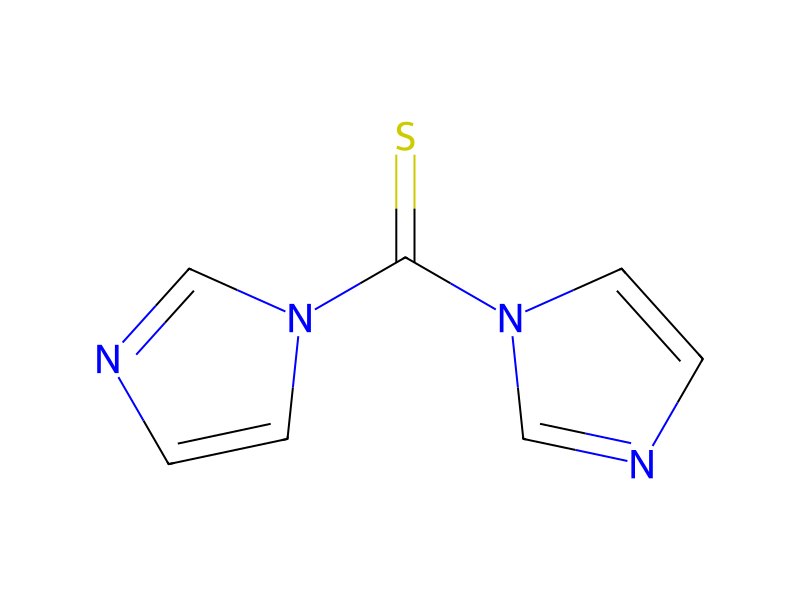
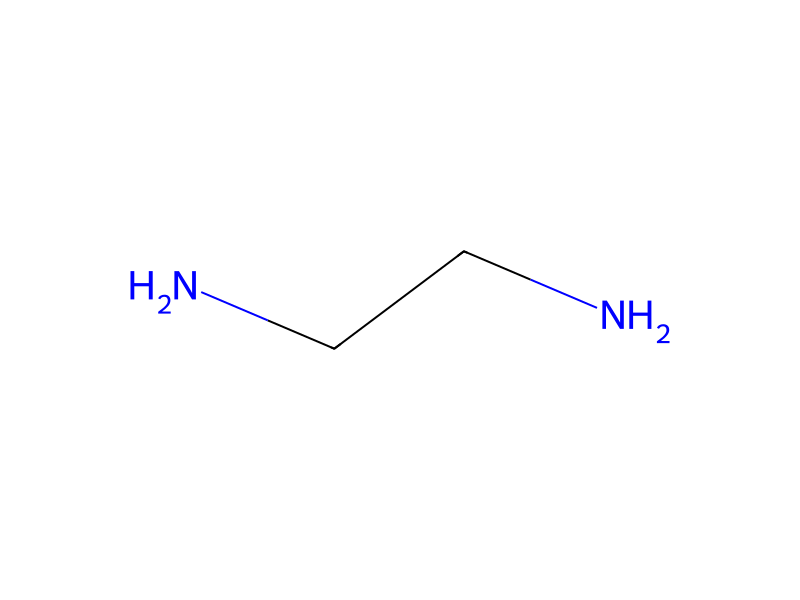
Other suitable reducing agents include lithium aluminum hydride. Treatment of 3-phenyl-1,2-diaminopropane with 1,1′-thiocarbonyldiimidazole rapidly produced 4-benzyl-2-imidazolidinethione 4. The yield was 90%, which is essentially quantitative since the starting material was about 90% pure. Most of the 2-imidazolidinethiones were prepared in good yields with 1,1′-thiocarbonyldiimadazole. However, the less expensive allyl isothiocyanate was also found to be an excellent reagent for the conversion of vicinal diamines to 2-imidazolidinethiones. The parent compound, 2-imidazolidinethione, was obtained in 91% yield from 1,2-diaminoethane and allyl isothiocyanate in refluxing bromobenzene. These conditions converted 2-thienyl-1,2-diaminoethane to the corresponding 2-imidazolidinethione, 36J, in 83% yield.
Workup
- customin good yields with 1,1′-thiocarbonyldiimadazole
Sources & evidence
- ORD record
- ord-91325dd4b4ee4c998f155c18756a4f97
- Source dataset
- uspto-grants-2006_10
- Patent number
- US07115748B2
Reaction notes
Loading…