Toluene → 4-Biphenylcarboxylic acid, 4'-chloro-
Reaction equation

[Cl:1][C:2]1[CH:7]=[CH:6][C:5](B(O)O)=[CH:4][CH:3]=1.I[C:12]1[CH:20]=[CH:19][C:15]([C:16]([OH:18])=[O:17])=[CH:14][CH:13]=1.C(=O)([O-])[O-].[Cs+].[Cs+].C1(C)C=CC=CC=1>C(O)CCC.O>[Cl:1][C:2]1[CH:7]=[CH:6][C:5]([C:12]2[CH:20]=[CH:19][C:15]([C:16]([OH:18])=[O:17])=[CH:14][CH:13]=2)=[CH:4][CH:3]=1Participants
7


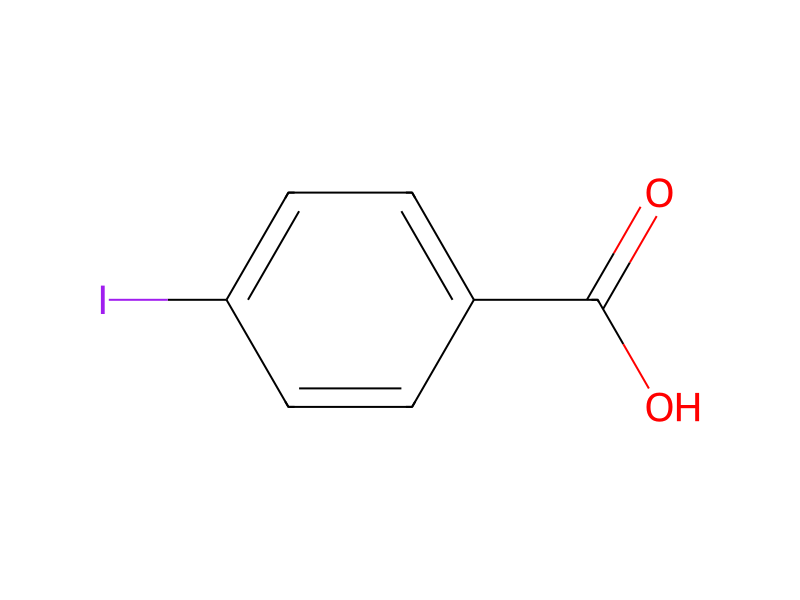




Conditions
- Temperature
- 80 °C
Procedure
4-Chlorophenylboronic acid (501 mg) was combined with 4-iodobenzoic acid (795 mg), cesium carbonate (5.22 g), toluene (16 mL), water (8 mL) and n-butanol (4 mL). The mixture was degassed under vacuum with argon purging after which, tetrakis-triphenylphosphine palladium (40 mg) was added. The reaction was heated to 80° C. for 20 hours after which, it was cooled to room temperature and diluted with ethyl acetate (16 mL). The solids were collected on a Celite pad and washed with hot methanol. The methanol filtrate was concentrated to dryness giving 4′-chloro-4-biphenylcarboxylic acid (305 mg). Yield=41%
Workup
- customThe mixture was degassed under vacuum with argon purging after which, tetrakis-triphenylphosphine palladium (40 mg)
- additionwas added
- temperaturewas cooled to room temperature
- additiondiluted with ethyl acetate (16 mL)
- customThe solids were collected on a Celite pad
- washwashed with hot methanol
- concentrationThe methanol filtrate was concentrated to dryness
Sources & evidence
- ORD record
- ord-1e3bf82385f142c3a777aa5e2486e965
- Source dataset
- uspto-grants-2006_10
- Patent number
- US07115741B2
Reaction notes
Loading…