Toluene → 1-(4-Aminobenzoyl)azepan-2-one
Reaction equation

[C:1]1(=[O:8])[NH:7][CH2:6][CH2:5][CH2:4][CH2:3][CH2:2]1.C1(C)C=CC=CC=1.S(=[N:18][C:19]1[CH:27]=[CH:26][C:22]([C:23](Cl)=[O:24])=[CH:21][CH:20]=1)=O>N1C=CC=CC=1>[NH2:18][C:19]1[CH:27]=[CH:26][C:22]([C:23]([N:7]2[CH2:6][CH2:5][CH2:4][CH2:3][CH2:2][C:1]2=[O:8])=[O:24])=[CH:21][CH:20]=1Participants
5
Reactant 3

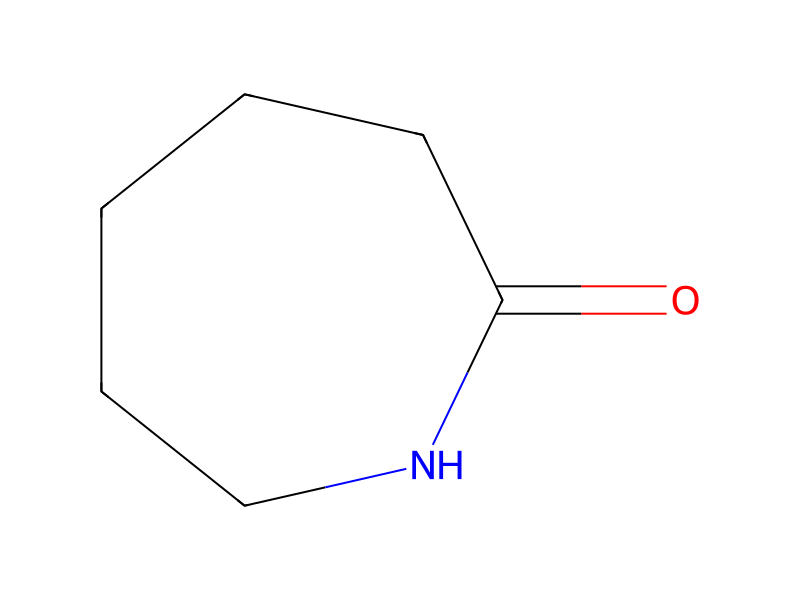

Product 1

Reagents, catalysts & solvents 1

Conditions
- Temperature
- 0 °C
Procedure
A 3-liter three-necked flask was charged with 144 g (1.27 moles) of ε-caprolactam, 2 L of toluene, and 1 L of pyridine. The mixture was stirred at 0° C. under nitrogen, to which was then added 256.5 g (1.27 moles) of p-sulfinylaminobenzoyl chloride. The mixture was slowly stirred until the temperature reached room temperature and then reacted for 14 hours. A deposited pyridine hydrochloride was filtered off, and the filtrate was washed twice with a 5% sodium hydrogencarbonate aqueous solution. A white residue obtained by distilling off the solvent of the organic phase was recrystallized twice from ethyl acetate to obtain N-(p-aminobenzoyl)caprolactam in a percent yield of 68%.
Workup
- stirringThe mixture was slowly stirred until the temperature
- customreached room temperature
- customreacted for 14 hours
- filtrationA deposited pyridine hydrochloride was filtered off
- washthe filtrate was washed twice with a 5% sodium hydrogencarbonate aqueous solution
- customA white residue obtained
- distillationby distilling off the solvent of the organic phase
- customwas recrystallized twice from ethyl acetate
Sources & evidence
- ORD record
- ord-2eb2bab3ee914019882f814567e55fde
- Source dataset
- uspto-grants-2006_10
- Patent number
- US07129314B2
Reaction notes
Loading…