Bromide ion → 4-Piperidinecarbonitrile, 4-phenyl-1-(phenylmethyl)-, hydrochloride (1:1)
Reaction equation

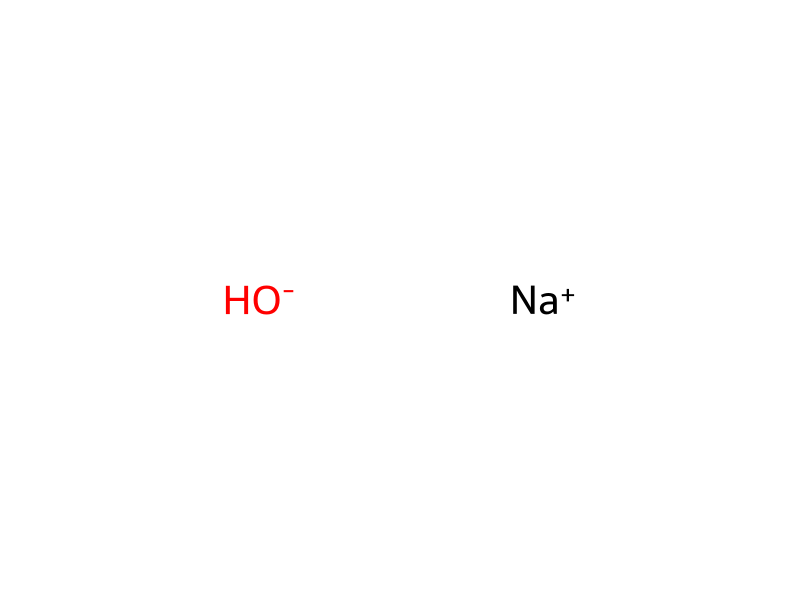
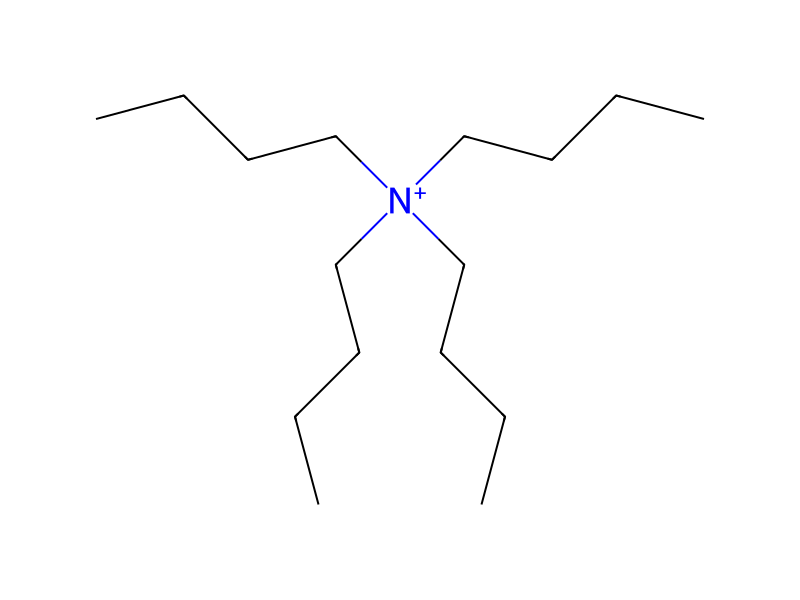
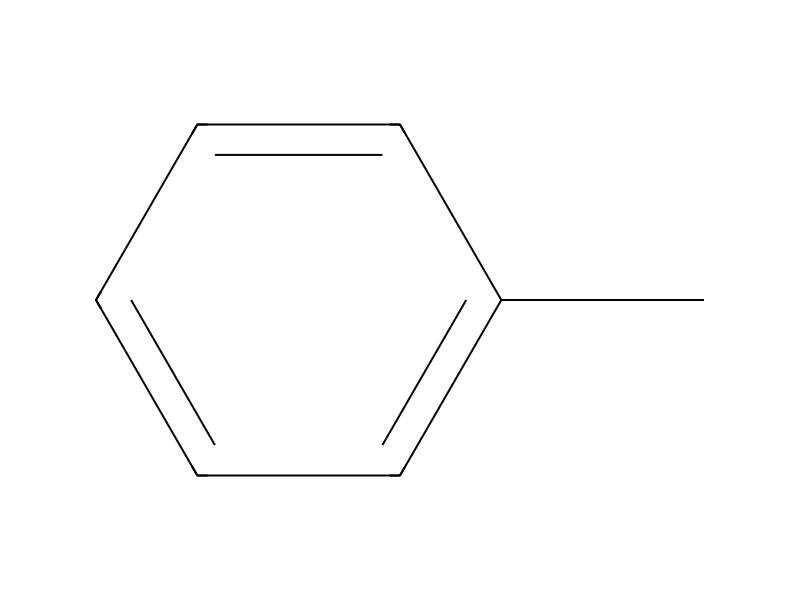
C([N+](CCCC)(CCCC)CCCC)CCC.S([O-])(O)(=O)=O.[Br-].[Cl-].[Cl:25][CH2:26][CH2:27][N:28]([CH2:36][CH2:37]Cl)[CH2:29][C:30]1[CH:35]=[CH:34][CH:33]=[CH:32][CH:31]=1.[C:39]1([CH2:45][C:46]#[N:47])[CH:44]=[CH:43][CH:42]=[CH:41][CH:40]=1.[OH-].[Na+]>C1(C)C=CC=CC=1.S([O-])(O)(=O)=O.C([N+](CCCC)(CCCC)CCCC)CCC>[ClH:25].[CH2:29]([N:28]1[CH2:36][CH2:37][C:45]([C:46]#[N:47])([C:39]2[CH:44]=[CH:43][CH:42]=[CH:41][CH:40]=2)[CH2:26][CH2:27]1)[C:30]1[CH:35]=[CH:34][CH:33]=[CH:32][CH:31]=1Participants
Reactant 7



Product 1

Reagents, catalysts & solvents 2

Procedure
The use of tetra-n-butylammonium salt, preferably the hydrogen sulfate or alternatively the bromide or chloride, in the reaction of bis(2-chloroethyl)benzylamine in toluene with phenylacetonitrile in the presence of aqueous sodium hydroxide results in yields of up to about 77% compared to much lower yields obtained using other quaternary ammonium salts. This aspect of the invention is preferably run by dissolving equimolecular amounts of N,N-bis(2-chloroethyl)benzylamine and phenylacetonitrile in toluene, adding 10 mole percent of tetran-butylammonium hydrogen sulfate, slowly adding with vigorous agitation four molar equivalents of 50% sodium hydroxide (over a short period, about 60 to 90 minutes), maintaining the agitated reaction mixture at about 65° to 85° C. until the reaction is completed (about three to four hours), quenching the reaction mixture with water, separating the toluene layer, washing it with water to neutral pH, distilling off the toluene in vacuo, dissolving the residue with a suitable solvent, e.g., methanol, acidifying the resulting solution with concentrated hydrochloric acid, collecting the precipitated product and drying it to obtain 1-benzyl-4-cyano-4-phenylpiperidine hydrochloride in yields up to about 77% based on benzyl chloride used in the preparation of N,N-bis(2-hydroxyethyl)benzylamine. In place of methanol other suitable solvents can be used, e.g., ethanol, acetone or isopropyl alcohol.
Workup
- customresults
- customin yields of up to about 77%
- customto much lower yields
- customobtained
- temperatureabout 60 to 90 minutes), maintaining
- customthe agitated reaction mixture at about 65° to 85° C. until the reaction
- custom(about three to four hours)
- customquenching the reaction mixture with water
- customseparating the toluene layer
- washwashing it with water to neutral pH
- distillationdistilling off the toluene in vacuo
- dissolutiondissolving the residue with a suitable solvent, e.g., methanol
- customcollecting the precipitated product
- customdrying it
Sources & evidence
- ORD record
- ord-8d200bdfae2b49ff92c5e3d2b1041fbc
- Source dataset
- uspto-grants-1988_05
- Patent number
- US04748276
Reaction notes
Loading…