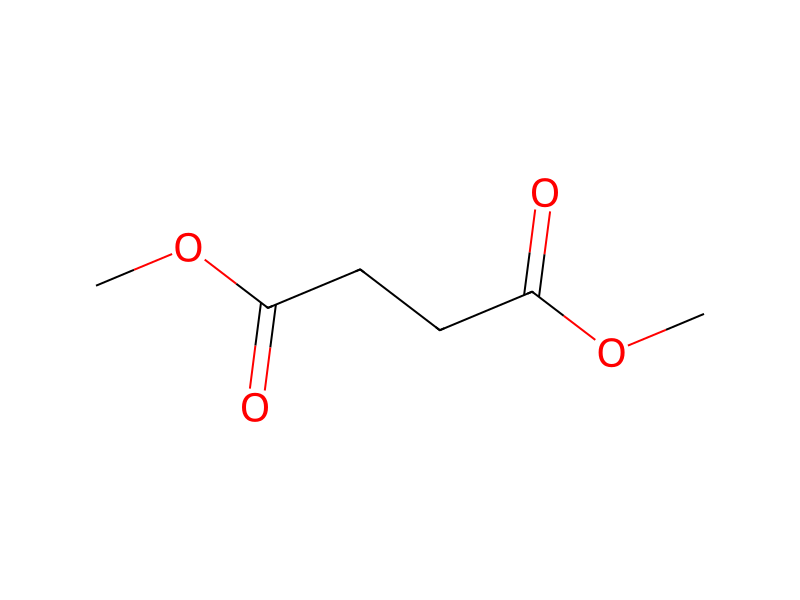
Dimethyl Succinate → HCID 51031686, compound
Reaction equation

[CH3:1][O:2][C:3]1[C:4]([CH3:14])=[C:5]([CH:9]=[CH:10][C:11]=1[O:12][CH3:13])[C:6](O)=O.O=S(Cl)Cl.[C:19]([O:27]C)(=[O:26])[CH2:20][CH2:21][C:22]([O:24][CH3:25])=O>[Pd].[O-]S([O-])(=O)=O.[Ba+2]>[CH3:25][O:24][C:22]1[C:9]2[C:5](=[C:4]([CH3:14])[C:3]([O:2][CH3:1])=[C:11]([O:12][CH3:13])[CH:10]=2)[CH:6]=[C:20]([C:19]([OH:27])=[O:26])[CH:21]=1Participants
Reactant 3


Product 1

Reagents, catalysts & solvents 1

Procedure
4,6,7-Trimethoxy-8-methyl-2-naphthoic acid (7) is prepared in six steps according to the following reaction diagram. Reduction of 3,4-dimethoxy-2-methylbenzoic acid (1) to aldehyde (2) can be carried out by the Rosenmund reaction (SOCl2 then H2, Pd/BaSO4) (see reference 27). The aldehyde (2) is then reacted with dimethyl succinate (Stobbe reaction) (see reference 28). The coupling product (3) is not isolated but is treated directly with sodium acetate in the presence of acetic anhydride and acetic acid (AcOH/Ac2O 1:1) to give 4. After saponification, 4-hydroxy-6,7-dimethoxy-8-methyl-2-naphthoic acid (5) is obtained with a yield of 70% (3 steps). After esterification under the conditions described above (90%), compound 6 is hydrolysed to give 4,6,7-trimethoxy-8-methyl-2-naphthoic acid (7) (92%).
Workup
- customaccording to the following reaction diagram
Sources & evidence
- ORD record
- ord-9ae20df716e1407997d525ed2d83cb7b
- Source dataset
- uspto-grants-2013_06
- Patent number
- US08455540B2
Reaction notes
Loading…