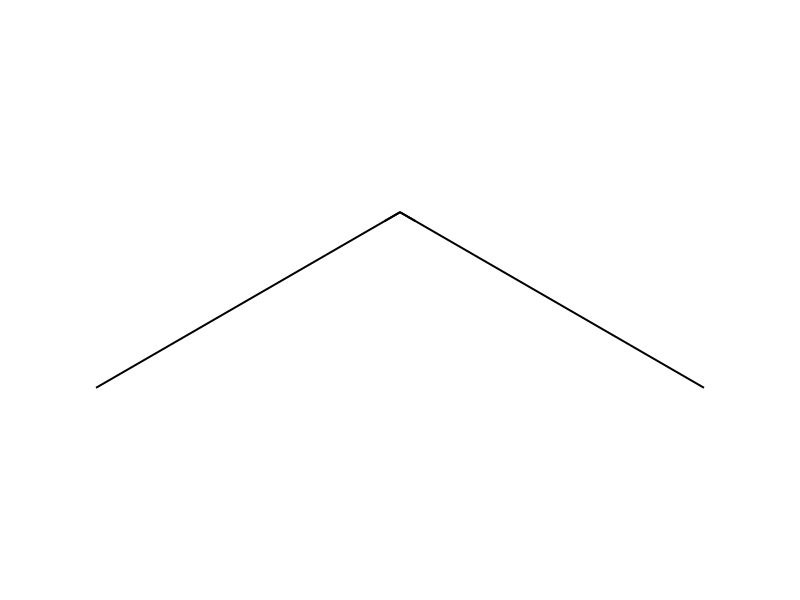
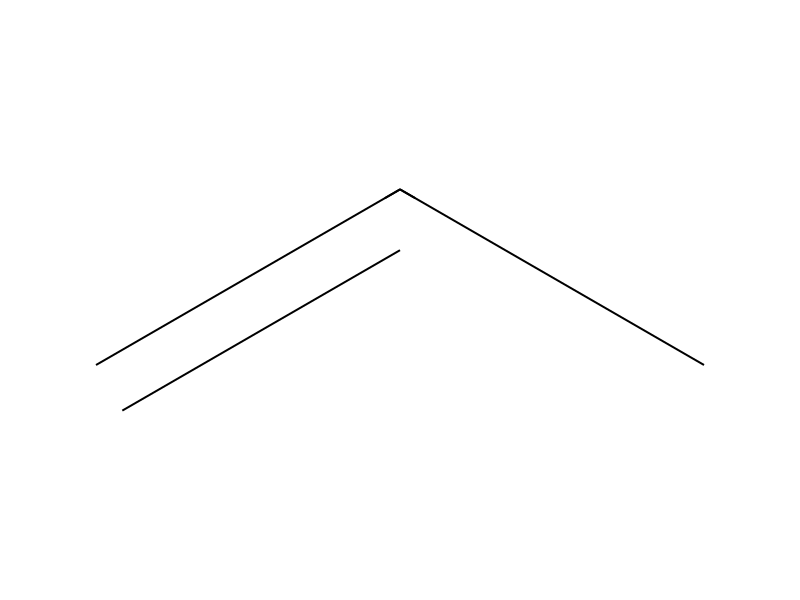
Propane → Acrylic Acid
Reaction equation

[C:1]([OH:5])(=[O:4])[CH:2]=[CH2:3].[CH3:6][CH2:7][CH3:8]>C(O)(=O)C>[C:1]([OH:5])(=[O:4])[CH:2]=[CH2:3].[CH2:6]=[CH:7][CH3:8].[CH:1]([CH:2]=[CH2:3])=[O:4]Participants
Reactant 2

Product 3

Reagents, catalysts & solvents 1

Procedure
There are few references reported in the literature relating to the production of acrylic acid from propane. U.S. Pat. No. 5,198,580 (Standard Oil) discloses a process for partial oxidation of propane to yield acrylic acid, propylene, acrolein, acetic acid and carbon oxides. The process involves the reaction of propane in admixture with a molecular oxygen-containing gas in a reaction zone with a catalyst containing Bib, Moc, Vv, Aa, Dd, Ee, Ox; where A is one or more of K, Na, Li, Cs and TI; D is one or more of Fe, Ni, Co, Zn, Ce and La; E is one or more of W, Nb, Sb, Sn, P, Cu, Pb, B, Mg, Ca and Sr; a, d and e is each from 0 to 10; b is from 0.1 to 10; c is from 0.1 to 20; v is from 0.1 to 10; c:b is from 2:1 to 30:1 and v:b is from 1.5:1 to 8:1. The acrylic acid yield achieved using the bismuth molybdate type of catalyst at a pressure of 138 kPag (20 psig) and a temperature of 400° C. is 5.4% at 19% conversion of propane.
Sources & evidence
- ORD record
- ord-455db062260648a2841ce9736f7f3f22
- Source dataset
- uspto-grants-2013_06
- Patent number
- US08470289B2
Reaction notes
Loading…