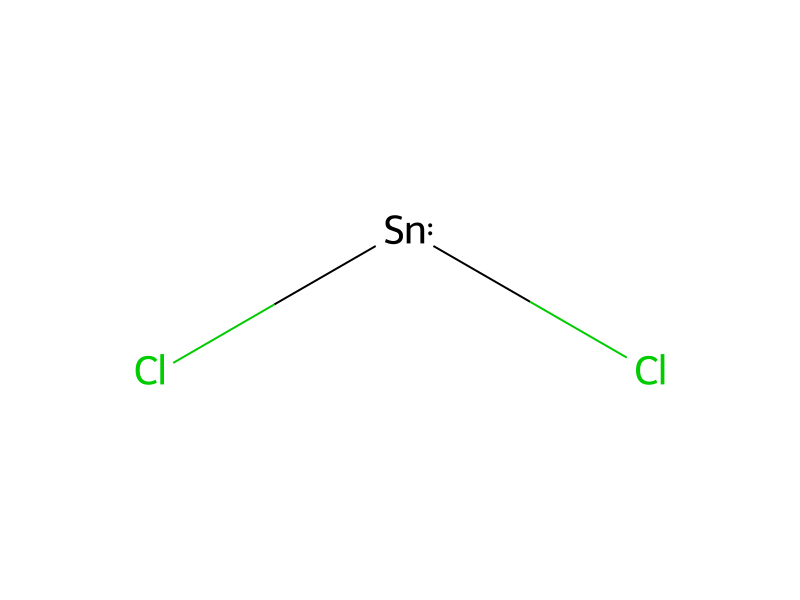
Stannous Chloride → HCID 67337824, compound
Reaction equation

[Cl:1][C:2]1[CH:3]=[C:4]([NH:8][C:9](=[O:22])/[CH:10]=[CH:11]/[C:12]2[CH:17]=[CH:16][C:15]([N+:18]([O-])=O)=[C:14]([OH:21])[CH:13]=2)[CH:5]=[CH:6][CH:7]=1.Cl[Sn]Cl>CCO>[Cl:1][C:2]1[CH:3]=[C:4]([NH:8][C:9](=[O:22])/[CH:10]=[CH:11]/[C:12]2[CH:17]=[CH:16][C:15]([NH2:18])=[C:14]([OH:21])[CH:13]=2)[CH:5]=[CH:6][CH:7]=1Participants
4
Reactant 2

Product 1

Reagents, catalysts & solvents 1

Procedure
(E)-N-(3-Chloro-phenyl)-3-(3-hydroxy-4-nitro-phenyl)-acrylamide (159 mg, 0.5 mmol) was suspended in EtOH (10 ml); SnCl2 (562 g, 2.5 mmol) was added and the mixture refluxed for 1.5 hrs. After cooling to RT, the solvent was evaporated. The residue was worked up with 5% sodium bicarbonate and 10% sodium potassium tartrate solutions, extracted with AcOEt, which was separated, dried and evaporated. The residue was triturated with a 1:1 diethyl ether-petroleum ether mixture, giving 89 mg of (E)-N-(3-chloro-phenyl)-3-(4-amino-3-hydroxy-phenyl)-acrylamide as a yellow solid.
Workup
- temperaturethe mixture refluxed for 1.5 hrs
- customthe solvent was evaporated
- extractionextracted with AcOEt, which
- customwas separated
- customdried
- customevaporated
- customThe residue was triturated with a 1:1 diethyl ether-petroleum ether mixture
Sources & evidence
- ORD record
- ord-919d485f69324ec7bb4629e52f5bd7d7
- Source dataset
- uspto-grants-2013_06
- Patent number
- US08470831B2
Reaction notes
Loading…