Toluene → Phenyl 1-hydroxy-2-naphthoate
Reaction equation

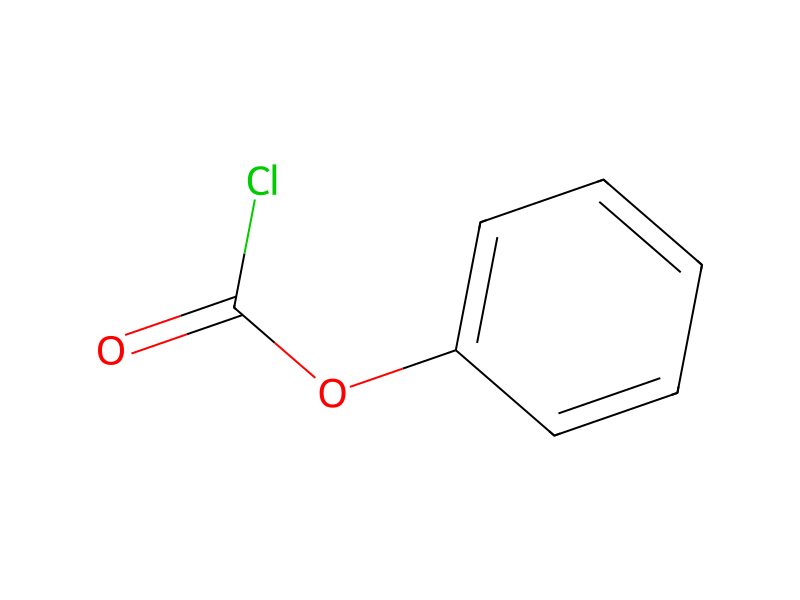
[C:1]1([OH:11])[C:10]2[C:5](=[CH:6][CH:7]=[CH:8][CH:9]=2)[CH:4]=[CH:3][CH:2]=1.C1(C)C=CC=CC=1.[Cl-].[Al+3].[Cl-].[Cl-].Cl[C:24]([O:26][C:27]1[CH:32]=[CH:31][CH:30]=[CH:29][CH:28]=1)=[O:25]>O>[OH:11][C:1]1[C:10]2[C:5](=[CH:6][CH:7]=[CH:8][CH:9]=2)[CH:4]=[CH:3][C:2]=1[C:24]([O:26][C:27]1[CH:32]=[CH:31][CH:30]=[CH:29][CH:28]=1)=[O:25]Participants
Reactant 4



Product 1

Reagents, catalysts & solvents 1

Procedure
To a 500-mL, three-neck, nitrogen-purged flask were added 28.8 g (0.20 mole) of 1-naphthol and 90 mL of toluene. To this stirred slurry was added 26.6 g (0.20 mole) of anhydrous aluminum chloride in portions over five minutes. The temperature of the mixture rose to 40°-50° C. during this addition. The orange slurry was heated to reflux, then 32.0 g (0.204 mole) of phenyl chloroformate was added over a period of 30 minutes. After this addition, the mixture was refluxed for 30 minutes then cooled to 30°-40° C. To the red reaction mixture was added 100 mL of water while holding the temperature at 35°-50° C. This addition is very exothermic initially, and ice bath cooling is used. During addition of the remaining water, the bath is lowered or removed in order to avoid cooling below 35° C. After this addition, 20 mL of 32% hydrochloric acid was added quickly at 35° -50° C. The mixture was stirred for 15 minutes, then the layers are allowed to separate. The lower (aqueous) layer was discarded. The top layer was washed (at 40°-50° C.) successively with: two 100-mL portions of 10% hydrochloric acid and two 100-mL portions of 40°-50° C. water. The solvent was then stripped off under vacuum (150-200 mm) to a pot temperature of 90° C. To the resulting amber liquid was added 120 mL of isopropyl alcohol at 70° C. The solution was cooled slowly to 0°-5° C. After stirring at 0°-5° C. for one hour, the slurry was filtered and the solids washed with three 25-mL portions of 0°-5° C. isopropyl alcohol. The yellow solids were air dried at 40° C. to give 31.5 g (59.7%) of phenyl 1-hydroxy-2-naphthoate.
Workup
- customTo a 500-mL, three-neck, nitrogen-purged flask
- additionThe temperature of the mixture rose to 40°-50° C. during this addition
- temperatureThe orange slurry was heated
- temperatureto reflux
- additionAfter this addition
- temperaturethe mixture was refluxed for 30 minutes
- temperaturethen cooled to 30°-40° C
- customTo the red reaction mixture
- customat 35°-50° C
- additionThis addition
- temperatureice bath cooling
- customremoved in order
- temperatureto avoid cooling below 35° C
- additionAfter this addition, 20 mL of 32% hydrochloric acid
- additionwas added quickly at 35° -50° C
- customto separate
- washThe top layer was washed (at 40°-50° C.) successively with: two 100-mL portions of 10% hydrochloric acid and two 100-mL portions of 40°-50° C. water
- customwas then stripped off under vacuum (150-200 mm) to a pot temperature of 90° C
- additionTo the resulting amber liquid was added 120 mL of isopropyl alcohol at 70° C
- temperatureThe solution was cooled slowly to 0°-5° C
- stirringAfter stirring at 0°-5° C. for one hour
- filtrationthe slurry was filtered
- washthe solids washed with three 25-mL portions of 0°-5° C. isopropyl alcohol
- customdried at 40° C.
Sources & evidence
- ORD record
- ord-46c499abf0f64cf794fbd3eace2c476c
- Source dataset
- uspto-grants-1984_06
- Patent number
- US04454340
Reaction notes
Loading…