1,1-Dichloroethane → 4-Fluoro-6-methoxy-2-methyl-5-(trifluoromethyl)pyrimidine
Reaction equation

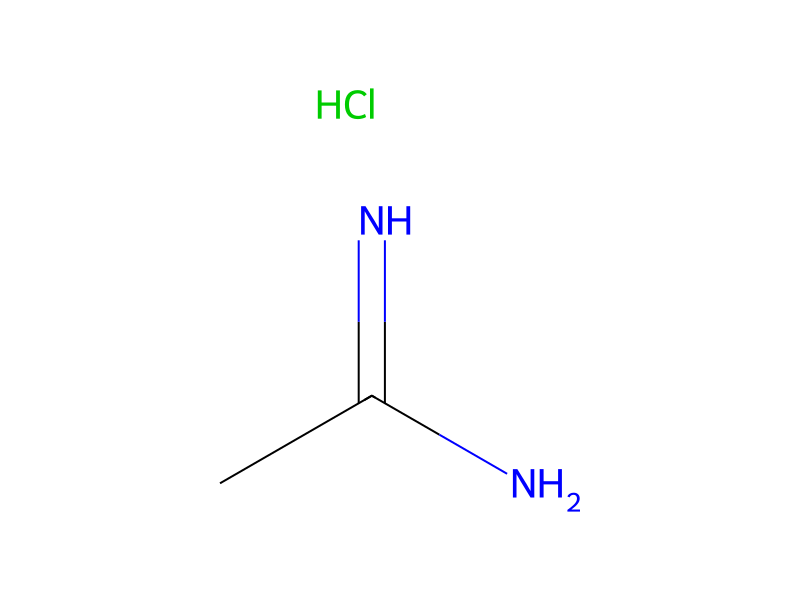
[CH3:1][O:2][C:3](F)(F)[CH:4]([C:9]([F:12])([F:11])[F:10])[C:5](F)(F)[F:6].Cl.[C:16]([NH2:19])(=[NH:18])[CH3:17].ClC(Cl)C.[OH-].[Na+]>[Cl-].C([N+](CC)(CC)CC)C1C=CC=CC=1.O>[F:6][C:5]1[C:4]([C:9]([F:12])([F:11])[F:10])=[C:3]([O:2][CH3:1])[N:19]=[C:16]([CH3:17])[N:18]=1Participants
7
Reactant 4



Product 1

Reagents, catalysts & solvents 2


Conditions
- Temperature
- 0 °C
Procedure
A reaction flask was loaded with 1,1,3,3,3-pentafluoro-2-trifluoromethylpropyl methyl ether (18.1 g), acetamidine hydrochloride (11.1 g), dichloroethane (78 ml), water (78 ml), and benzyltriethylammonium chloride (0.078 g), and cooled to 0° C. with stirring. To this mixture, a 17% aqueous solution of sodium hydroxide (93 g) was dropwise added in 1.5 hours, followed by stirring for 1 hour. Thereafter, the cooling was stopped, and an organic layer was separated from the reaction mixture at room temperature and condensed to give 4-fluoro-6-methoxy-2-methyl-5-(trifluoromethyl)-pyrimidine (22 g). By GC/MS analysis, a molecular ion peak of 210 was confirmed for this compound.
Workup
- stirringby stirring for 1 hour
- customan organic layer was separated from the reaction mixture at room temperature
- customcondensed
Sources & evidence
- ORD record
- ord-579c483760d94d439732ee520895c018
- Source dataset
- uspto-grants-2003_04
- Patent number
- US06551682B1
Reaction notes
Loading…