Ammonia → 2-Bromo-6-[4-(trifluoromethyl)phenyl]pyrazine
Reaction equation

Cl[C:2]1[CH:7]=[N:6][CH:5]=[C:4]([C:8]2[CH:13]=[CH:12][C:11]([C:14]([F:17])([F:16])[F:15])=[CH:10][CH:9]=2)[N:3]=1.P(Br)(Br)[Br:19].N>O>[Br:19][C:2]1[CH:7]=[N:6][CH:5]=[C:4]([C:8]2[CH:13]=[CH:12][C:11]([C:14]([F:17])([F:16])[F:15])=[CH:10][CH:9]=2)[N:3]=1Participants
5
Reactant 3

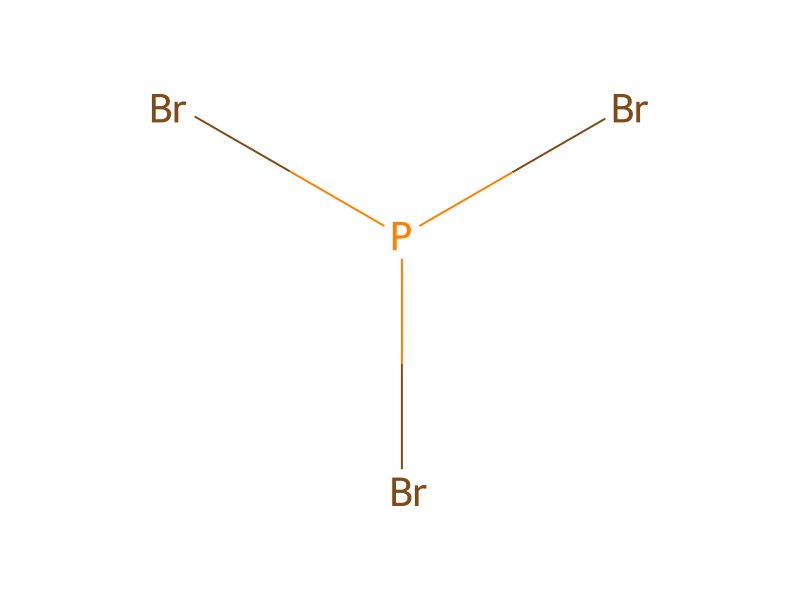

Product 1

Reagents, catalysts & solvents 1

Procedure
To a flask containing 2-chloro-6-[4-(trifluoromethyl)phenyl]pyrazine (0.8 g, 3.1 mmol), was added phosphorus tribromide (20 mL) and the mixture heated at reflux for 6 h under nitrogen. The reaction mixture was cooled to room temperature prior to pouring carefully into iced water (400 mL), the resulting mixture was adjusted to pH 6–7 using aqueous ammonia and extracted with diethylether (3×250 mL). The organic solution was dried (MgSO4) and the solvent removed in vacuo to afford the title compound as a pale yellow crystalline solid (0.97 g).
Workup
- temperaturethe mixture heated
- temperatureat reflux for 6 h under nitrogen
- extractionextracted with diethylether (3×250 mL)
- dry with materialThe organic solution was dried (MgSO4)
- customthe solvent removed in vacuo
Sources & evidence
- ORD record
- ord-0ab5a336acef454597997fc74bea4031
- Source dataset
- uspto-grants-2007_04
- Patent number
- US07199239B2
Reaction notes
Loading…