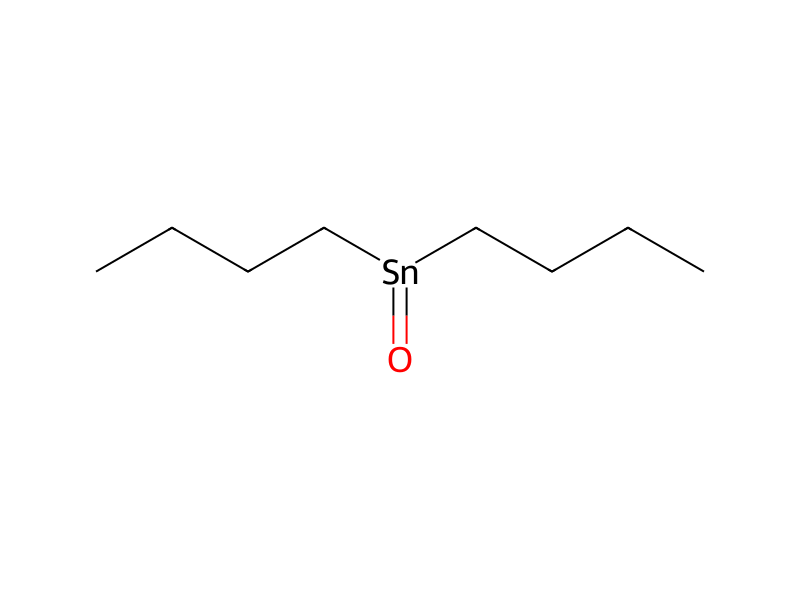
Dibutyltin oxide → p-Nitrophenyl 3-O-methyl-beta-L-fucopyranoside
Reaction equation

[O:1]([C:12]1[CH:17]=[CH:16][C:15]([N+:18]([O-:20])=[O:19])=[CH:14][CH:13]=1)[C@H:2]1[O:10][C@@H:9]([CH3:11])[C@@H:7]([OH:8])[C@@H:5]([OH:6])[C@@H:3]1[OH:4].[CH2:21]([Sn](=O)CCCC)CCC>CO>[CH3:21][O:6][C@@H:5]1[C@H:7]([OH:8])[C@H:9]([CH3:11])[O:10][C@H:2]([O:1][C:12]2[CH:13]=[CH:14][C:15]([N+:18]([O-:20])=[O:19])=[CH:16][CH:17]=2)[C@H:3]1[OH:4]Participants
4
Reactant 2

Product 1

Reagents, catalysts & solvents 1

Conditions
- Temperature
- 70 °C
Procedure
6 g (21 mmol) of p-nitrophenyl β-L-fucopyranoside in 300 ml of absol. methanol are treated with 7.84 g (31.5 mmol) of dibutyl tin oxide and heated under reflux for 2 h. The mixture is then concentrated, and the residue is dried and then taken up in 300 ml of DMF. After addition of 15.7 ml of methyl iodide, the batch is stirred at 70° C. for 40 h. The solvent is removed under reduced pressure and the residue is taken up in 300 ml of dichloromethane. The suspension is filtered, and the solution that remains is concentrated again and subjected to flash chromatography (dichloromethane/methanol 99:1). The concentration gives 3.82 g (61%) of the target product.
Workup
- temperatureheated
- temperatureunder reflux for 2 h
- concentrationThe mixture is then concentrated
- customthe residue is dried
- additionAfter addition of 15.7 ml of methyl iodide
- customThe solvent is removed under reduced pressure
- filtrationThe suspension is filtered
- concentrationthe solution that remains is concentrated again
- concentrationThe concentration
Sources & evidence
- ORD record
- ord-b77b79a0c28f4421bbf7b7fd51d82fb9
- Source dataset
- uspto-grants-2000_12
- Patent number
- US06156754
Reaction notes
Loading…