Sodium Sulfate → Sodium sulfate heptahydrate
Reaction equation

[S:1]([O-:5])([O-:4])(=[O:3])=[O:2].[Na+:6].[Na+]>O>[OH2:2].[OH2:2].[OH2:2].[OH2:2].[OH2:2].[OH2:2].[OH2:2].[S:1]([O-:5])([O-:4])(=[O:3])=[O:2].[Na+:6].[Na+:6]Participants
3
Reactant 1
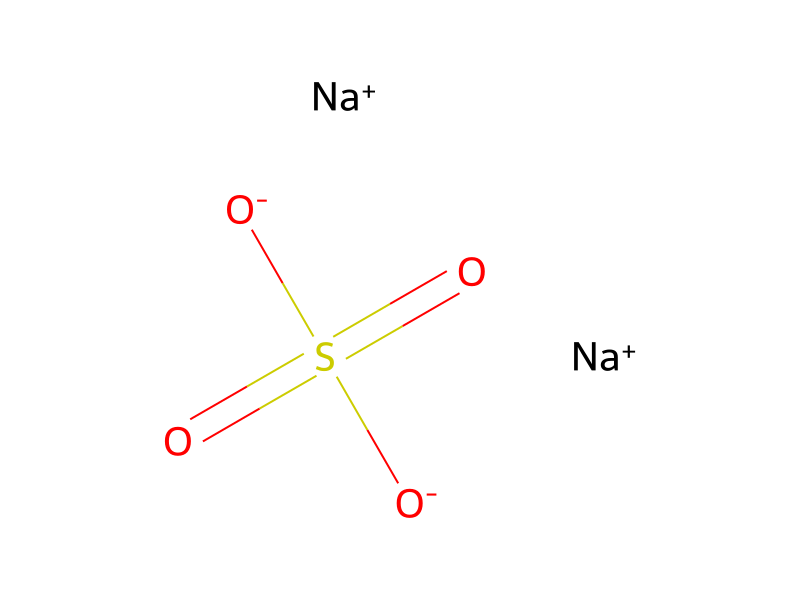
Product 1

Reagents, catalysts & solvents 1

Procedure
Another problem with the known leaching methods is that, if these methods are carried out in lukewarm or cold water, i.e. at less than approx. 32° C., when the solubility of the sodium sulphate is low, the sodium sulphate will become surrounded by water molecules and form sodium sulphate heptahydrate or, more usually, sodium sulphate decahydrate. If the sodium sulphate is returned to the black liquor in this form, the concentrated black liquor will then be diluted with this water, something which naturally constitutes an undesirable problem.
Workup
- customat less than approx. 32° C.
Sources & evidence
- ORD record
- ord-701085eeef3a4fb2b0283d16226db4af
- Source dataset
- uspto-grants-2000_12
- Patent number
- US06162408
Reaction notes
Loading…