Hydrogen Peroxide → Benzoic Acid
Reaction equation

C[O:2]CC.OO.FC(F)(F)[C:9]([C:11]1[CH:16]=[CH:15][CH:14]=[CH:13][CH:12]=1)=[O:10].FC(F)(F)C(Cl)=O.[C-]#N.[Na+]>C(O)(C)(C)C>[C:9]([OH:10])(=[O:2])[C:11]1[CH:16]=[CH:15][CH:14]=[CH:13][CH:12]=1Participants
Reactant 5



Product 1
Reagents, catalysts & solvents 1

Procedure
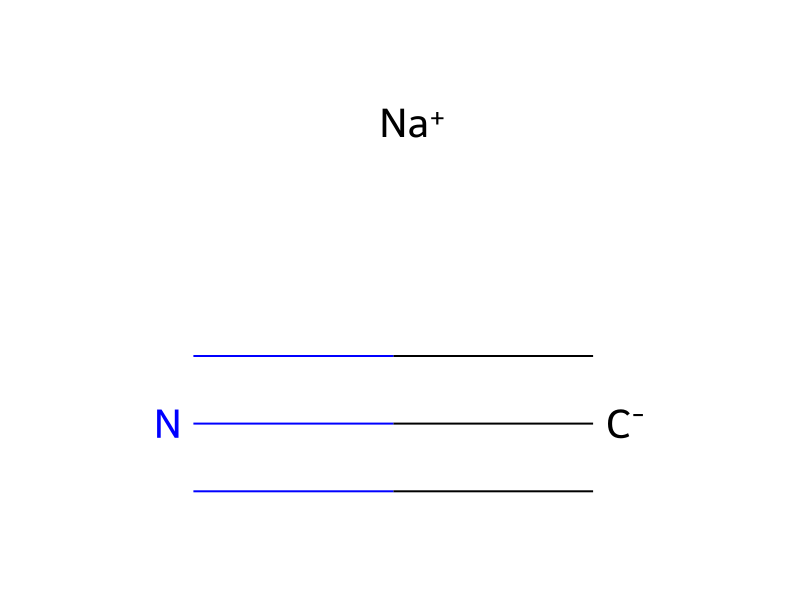
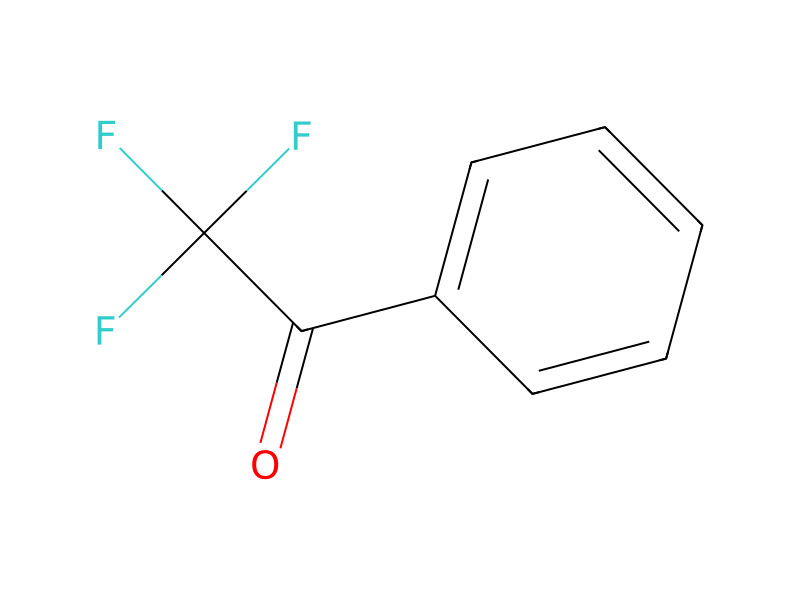
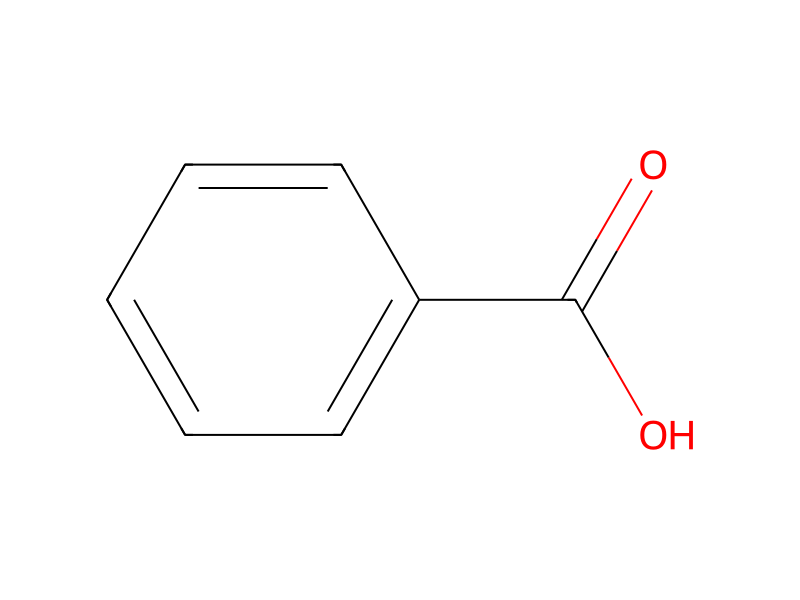
For example, according to J. Org. Chem. 34, 2543 (1969), sodium cyanide is reacted with α,α,α-trifluoroacetophenone in 1,2-dimethoxyethane, then alkylated with dimethyl sulphate, then the nitrile is hydrolysed to give the amide and, finally, the amide is hydrolysed to give the acid. In a variation of this process, instead of the methoxyethane, t-butanol is used and the hydrolyses are carried out using alkaline hydrogen peroxide solution (Tetrahedron 42, 547 (1986)). In both cases, disadvantages are the poor availability of the trifluoroacetophenone, the preparation 20 of which involves the handling of gaseous trifluoroacetyl chloride (boiling point: +2° C.), and the fact that trifluoroacetophenone is only obtainable in moderate yields. In addition, toxic sodium cyanide has to be handled, which signifies extra expenditure, including for disposal. Finally, the hydrolyses produce benzoic acid as secondary component, which because of its ability to sublime, can only be removed with difficulty, as a result of which this method generally only gives products containing benzoic acid.
Workup
- customto give the acid
- customthe preparation 20 of which
Sources & evidence
- ORD record
- ord-22a593252fa34b898e4b1ea6636ad0cf
- Source dataset
- uspto-grants-2000_12
- Patent number
- US06162943
Reaction notes
Loading…