Squalene → Squalane
Reaction equation

[CH3:1][C:2](=[CH:4][CH2:5][CH2:6]/[C:7](=[CH:9]/[CH2:10][CH2:11]/[C:12](=[CH:14]/[CH2:15][CH2:16]/[CH:17]=[C:18](/[CH2:20][CH2:21]/[CH:22]=[C:23](/[CH2:25][CH2:26][CH:27]=[C:28]([CH3:30])[CH3:29])\[CH3:24])\[CH3:19])/[CH3:13])/[CH3:8])[CH3:3]>[Ni].C(CC(C)(C)C)(C)C.[H][H]>[CH3:30][CH:28]([CH2:27][CH2:26][CH2:25][CH:23]([CH2:22][CH2:21][CH2:20][CH:18]([CH2:17][CH2:16][CH2:15][CH2:14][CH:12]([CH2:11][CH2:10][CH2:9][CH:7]([CH2:6][CH2:5][CH2:4][CH:2]([CH3:3])[CH3:1])[CH3:8])[CH3:13])[CH3:19])[CH3:24])[CH3:29]Participants
5
Reactant 1
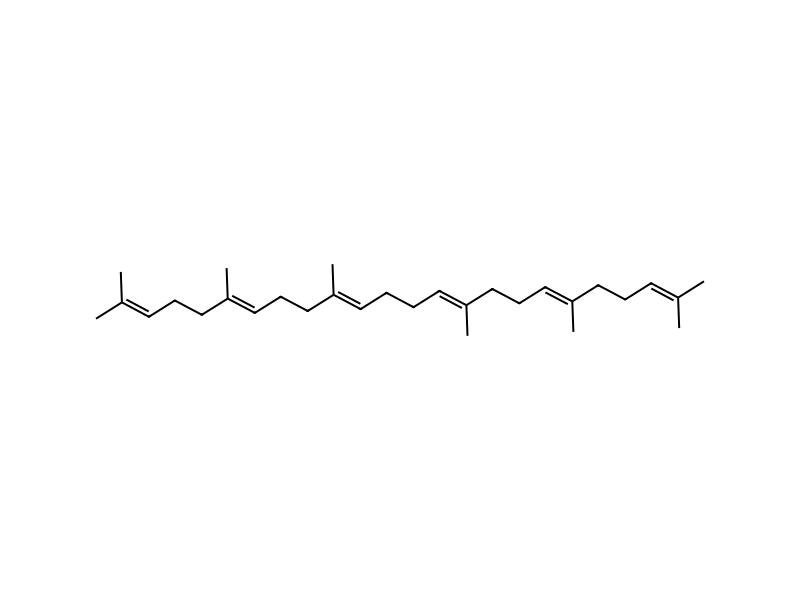
Product 1

Reagents, catalysts & solvents 3



Procedure
A tubular reactor of 2.0 cm in inner diameter and 10 cm in length was packed with 20 g of carrier-supported nickel catalyst. Hydrogenation was carried out by feeding into the reactor the 50 wt % squalene solution in isooctane and hydrogen gas to obtain a squalane solution in isooctane. Samples were taken out for 30 hours after the temperature was stabilized at 210° C.
Sources & evidence
- ORD record
- ord-ca3ad0127b054012b70cf80a5a514a81
- Source dataset
- uspto-grants-2000_12
- Patent number
- US06165481
Reaction notes
Loading…