1,4-Dibromobutane → 2-(4-Bromobutyl)-5-methylthiophene
Reaction equation

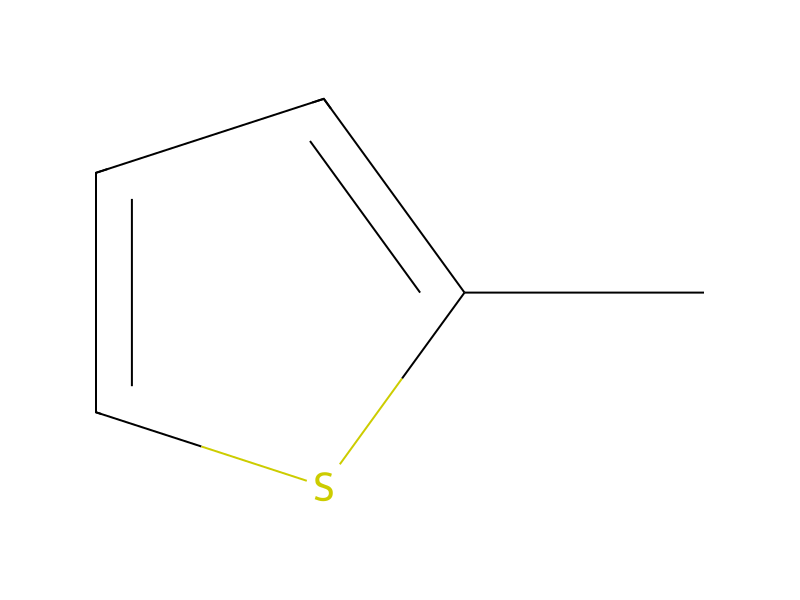
[Br:1][CH2:2][CH2:3][CH2:4][CH2:5]Br.[Li].[CH3:8][C:9]1[S:10][CH:11]=[CH:12][CH:13]=1>O>[Br:1][CH2:2][CH2:3][CH2:4][CH2:5][C:11]1[S:10][C:9]([CH3:8])=[CH:13][CH:12]=1Participants
Reactant 3

Product 1

Reagents, catalysts & solvents 1

Procedure
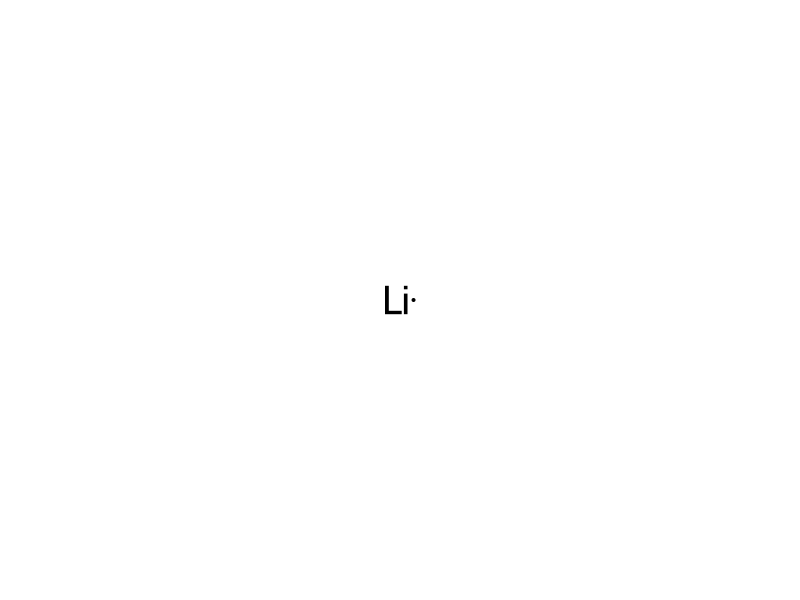
This procedure was used to synthesize the disubstituted synthetic intermediate 2-(n-bromoalkyl)-5-R-thiophene (2, wherein R is not H). The synthesis of 2h was accomplished by first synthesizing the 2-methylthienyllithium intermediate. A solution of n-butyllithium (2.5 M in hexane) (Aldrich Chemical Co.) (4.4 mL, 0.011 moles) was added dropwise to 2-methylthiophene (0.98 gm, 0.01 moles) (Lancaster Synthesis, Windham, N.H.) in THF (50 mL) at 0° C. to yield the lithium salt of 2-methylthiophene. The solution was stirred at room temperature for one hour. 1,4-Dibromobutane (3.24 gm, 0.015 moles) was added in one lot to the lithium salt of 2-methylthiophene at 0° C. The solution was allowed to warm to room temperature and stirred for 12 hours. Water (20 mL) was added and the layers were separated. The organic layer was diluted with ethyl acetate (50 mL) and washed with water (3×10 mL), dried over MgSO4 (anhydrous), filtered and evaporated under reduced pressure. Purification by column chromatography (silica gel, hexanes) gave 2 gm of 2-(4-bromobutyl)-5-methylthiophene (2h) (85.8%).
Workup
- temperatureto warm to room temperature
- stirringstirred for 12 hours
- customthe layers were separated
- additionThe organic layer was diluted with ethyl acetate (50 mL)
- washwashed with water (3×10 mL)
- dry with materialdried over MgSO4 (anhydrous)
- filtrationfiltered
- customevaporated under reduced pressure
- customPurification by column chromatography (silica gel, hexanes)
Sources & evidence
- ORD record
- ord-cf4af93722a842c2b849ea977c058952
- Source dataset
- uspto-grants-2000_12
- Patent number
- US06166003
Reaction notes
Loading…