Sodium Hydroxide → 4,5-Difluoro-2-hydroxybenzoic acid
Reaction equation

F[C:2]1[CH:10]=[C:9]([F:11])[C:8]([F:12])=[CH:7][C:3]=1[C:4]([OH:6])=[O:5].[OH-:13].[Na+]>CN1CCN(C)C1=O>[F:11][C:9]1[CH:10]=[C:2]([OH:13])[C:3](=[CH:7][C:8]=1[F:12])[C:4]([OH:6])=[O:5]Participants
4
Reactant 2


Product 1

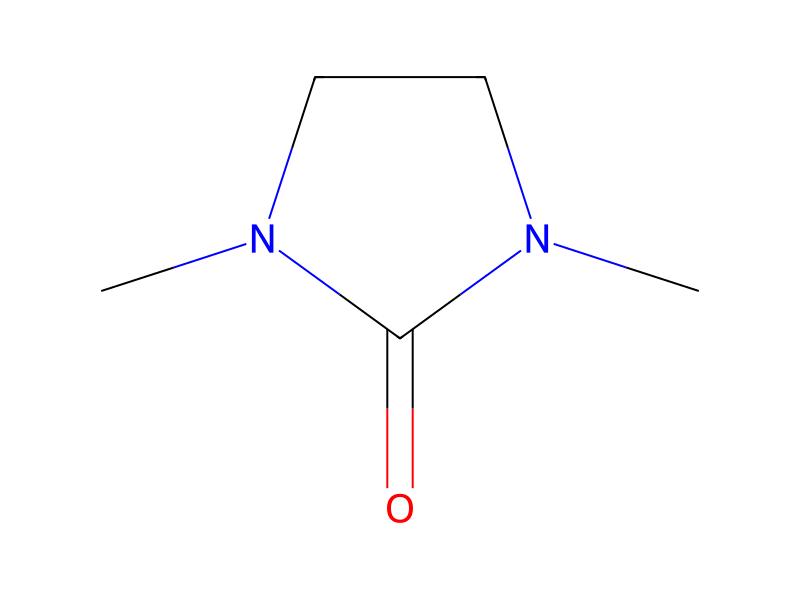
Reagents, catalysts & solvents 1
Conditions
- Temperature
- 130 °C
Procedure
1.76 g (0.01 mole) of 2,4,5-trifluorobenzoic acid, 1.62 g (0.04 mole) of powdery 99% sodium hydroxide and 20 ml of 1,3-dimethyl-2-imidazolidinone were fed into a 100-ml four-necked flask provided with a thermometer, a stirrer and a reflux condenser. The mixture was stirred at 130° C. for 3 hours to give rise to a reaction. Then, the same post-treatment as in Example 1 was conducted to obtain 0.50 g of 4,5-difluorosalicylic acid. The isolated yield was 28.7% relative to the 2,4,5-trifluorobenzoic acid used.
Workup
- customprovided with a thermometer, a stirrer and a reflux condenser
- customto give rise
- customto a reaction
Sources & evidence
- ORD record
- ord-b84977336b9c47c5a9cf3484753b67d8
- Source dataset
- uspto-grants-2000_12
- Patent number
- US06166246
Reaction notes
Loading…