Sodium Hydroxide → 1-[4-(4-Benzyl-1-piperazinyl)butyl]-2-pyrrolidinone
Reaction equation

Br[CH2:2][CH2:3][CH2:4][CH2:5][N:6]1[CH2:10][CH2:9][CH2:8][C:7]1=[O:11].[CH2:12]([N:19]1[CH2:24][CH2:23][NH:22][CH2:21][CH2:20]1)[C:13]1[CH:18]=[CH:17][CH:16]=[CH:15][CH:14]=1.[OH-].[Na+]>C(O)C>[CH2:12]([N:19]1[CH2:24][CH2:23][N:22]([CH2:2][CH2:3][CH2:4][CH2:5][N:6]2[CH2:10][CH2:9][CH2:8][C:7]2=[O:11])[CH2:21][CH2:20]1)[C:13]1[CH:14]=[CH:15][CH:16]=[CH:17][CH:18]=1Participants
5
Reactant 3

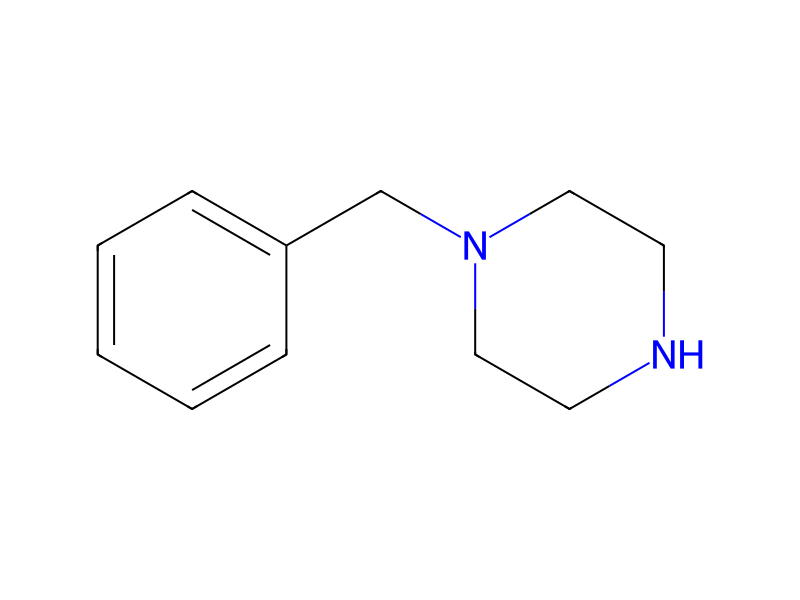

Product 1

Reagents, catalysts & solvents 1

Procedure
A mixture of 1-(4-bromobutyl)-2-pyrrolidinone (2.0 g/9.1 mmol) and benzylpiperazine (1.58 ml/9.1 mmol) in ethanol (4.5 ml) was stirred overnight at ambient temperature. The mixture was basified with 2 N NaOH and extracted with dichloromethane (50 ml×2). The combined extracts were washed with brine, dried over magnesium sulfate, filtered and concentrated. The residue was purified by column chromatography (100 g/dichloromethane=100:5-100:10) to give a pale yellow oil (1.6 g/56%).
Workup
- extractionextracted with dichloromethane (50 ml×2)
- washThe combined extracts were washed with brine
- dry with materialdried over magnesium sulfate
- filtrationfiltered
- concentrationconcentrated
- customThe residue was purified by column chromatography (100 g/dichloromethane=100:5-100:10)
- customto give a pale yellow oil (1.6 g/56%)
Sources & evidence
- ORD record
- ord-7a0a0c0f92e34039b8432c40663e5c47
- Source dataset
- uspto-grants-2002_09
- Patent number
- US06444677B2
Reaction notes
Loading…