Ammonia → 6-Aminohexanoic Acid
Reaction equation

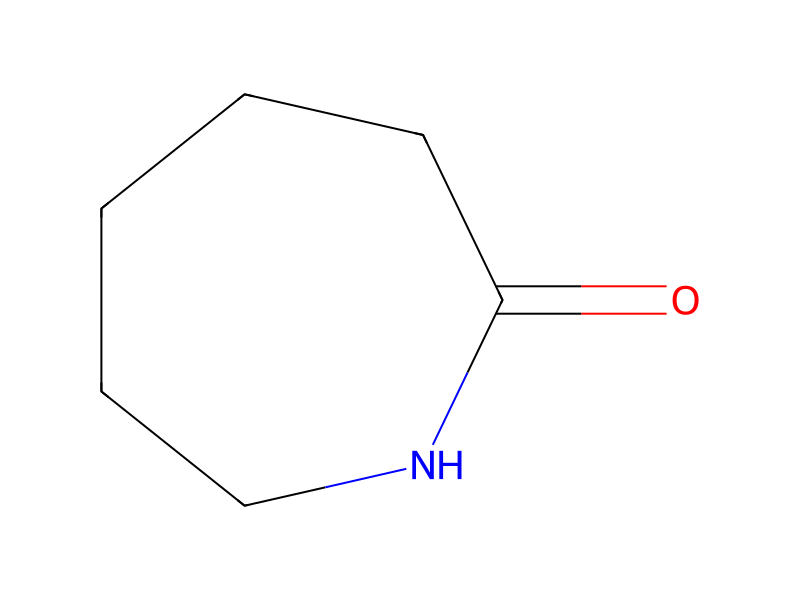
C(CCCCC(O)=O)=O.N.[H][H].[NH2:13][CH2:14][CH2:15][CH2:16][CH2:17][CH2:18][C:19]([OH:21])=[O:20]>O.[Ni].[Co].[Ru].[Zr]>[C:19]1(=[O:21])[NH:13][CH2:14][CH2:15][CH2:16][CH2:17][CH2:18]1.[NH2:13][CH2:14][CH2:15][CH2:16][CH2:17][CH2:18][C:19]([OH:21])=[O:20]Participants
10
Reactant 4



Product 2
Reagents, catalysts & solvents 4




Conditions
- Temperature
- 300 °C
Procedure
A process for preparing ε-caprolactam is described in U.S. Pat. No. 4,730,040. In this process, methyl 5-formylvalerate is first hydrolyzed (step a) in the presence of water and an acidic agent to yield 5-formylvaleric acid. In this process, the 5-formylvaleric acid is reductively aminated in water through contact with ammonia and hydrogen using a ruthenium/zirconium on alumina catalyst, a Raney Nickel catalyst or a Raney Cobalt catalyst to obtain a 6-aminocaproic acid containing reaction mixture. After separation of ammonia, the reaction mixture obtained from the reductive amination is heated to 300° C. to form ε-caprolactam by cyclization of the 6-aminocaproic acid.
Workup
- customAfter separation of ammonia
- customthe reaction mixture obtained from the reductive amination
Sources & evidence
- ORD record
- ord-5391a5edd78a49e794dec2ab84aa4a8b
- Source dataset
- uspto-grants-2002_09
- Patent number
- US06452002B2
Reaction notes
Loading…