Quinone → 5,6-Dichloro-2-(3-fluoro-4-formylphenyl)benzimidazole
Reaction equation

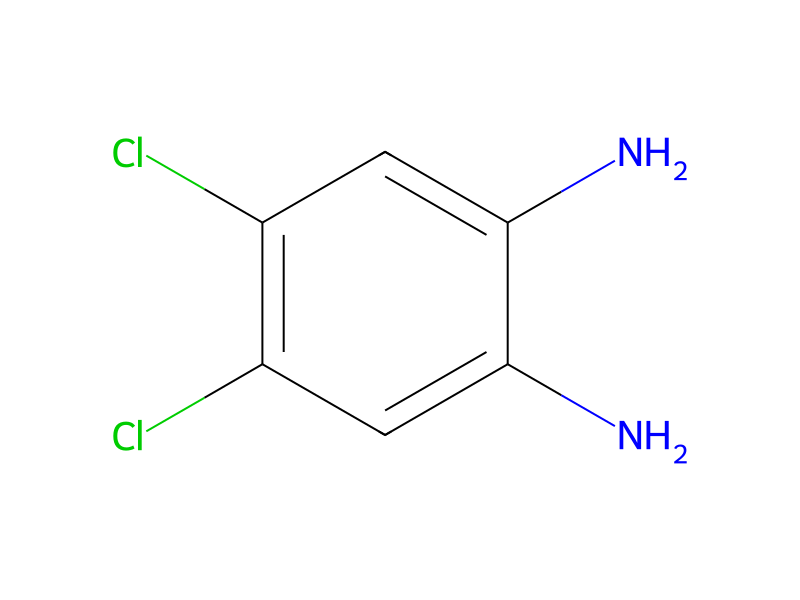
CO[CH:3]([O:13]C)[C:4]1[CH:11]=[CH:10][C:7]([CH:8]=O)=[CH:6][C:5]=1[F:12].[Cl:15][C:16]1[C:21]([Cl:22])=[CH:20][C:19]([NH2:23])=[C:18]([NH2:24])[CH:17]=1.C1(=O)C=CC(=O)C=C1>CO>[Cl:15][C:16]1[C:21]([Cl:22])=[CH:20][C:19]2[N:23]=[C:8]([C:7]3[CH:10]=[CH:11][C:4]([CH:3]=[O:13])=[C:5]([F:12])[CH:6]=3)[NH:24][C:18]=2[CH:17]=1Participants
5




Procedure
A mixture of 4-dimethoxymethyl-3-fluorobenzaldehyde (321 mg, 1.62 mmol), 4,5-dichloro-1,2-phenylenediamine (283 mg, 1.60 mg) and 1,4-benzoquinone (173 mg, 1.60 mmol) in methanol (10 mL) was heated to reflux for 2 h. The solvent was removed under reduced pressure. To the residue were added tetrahydrofuran (15 mL) and hydrochloric acid (1 mol/L; 1.6 mL), and the mixture was stirred at room temperature for 16 h. Water was added and the precipitated products were collected by filtration, followed by trituration with ether to afford 5,6-dichloro-2-(3-fluoro-4-formylphenyl)benzimidazole (132 mg, 26%).
Workup
- temperaturewas heated
- temperatureto reflux for 2 h
- customThe solvent was removed under reduced pressure
- additionTo the residue were added tetrahydrofuran (15 mL) and hydrochloric acid (1 mol/L; 1.6 mL)
- additionWater was added
- filtrationthe precipitated products were collected by filtration
Sources & evidence
- ORD record
- ord-e11fcb971d10433a9284f1cda13e804f
- Source dataset
- uspto-grants-2002_09
- Patent number
- US06452014B1
Reaction notes
Loading…