Formic Acid → 5-Bromooxazolo[5,4-b]pyridine
Reaction equation

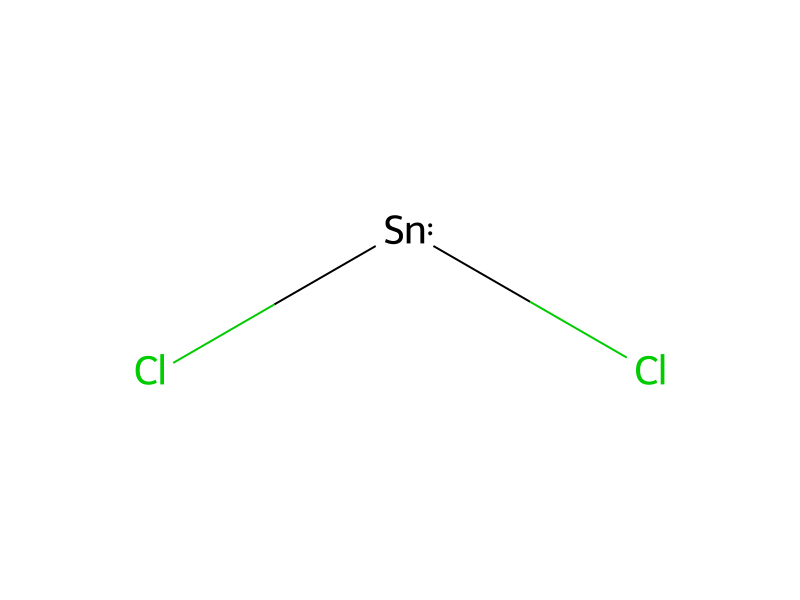
NC1C(O)=NC=C([Br:8])C=1.[Sn](Cl)Cl.[N+:13]([C:16]1[C:17](O)=[N:18][CH:19]=[CH:20][CH:21]=1)([O-])=O.[CH:23]([OH:25])=O>>[Br:8][C:19]1[N:18]=[C:17]2[O:25][CH:23]=[N:13][C:16]2=[CH:21][CH:20]=1Participants



Procedure
5-Bromooxazolo[5,4-b]pyridine, isomeric by orientation of ring fusion to the previously described 6-bromooxazolo[4,5-b]pyridine, can also be used in the Heck coupling with N-methyl-N-(tert-butoxycarbonyl)-4-penten-2-amine. Subsequent removal of the tert-butoxycarbonyl protecting group provides (4E)-N-methyl-5-(5-oxazolo[5,4-b]pyridinyl)-4-penten-2-amine. The required 5-bromooxazolo[5,4-b]pyridine is synthesized from 3-amino-5-bromo-2-pyridinol (3-amino-5-bromo-2-pyridone) by the condensation with formic acid (or a derivative thereof) as described above. 3-Amino-5-bromo-2-pyridinol can be made by bromination (using techniques described by T. Batkowski, Rocz. Chem. 41: 729-741 (1967)) and subsequent tin(II) chloride reduction (according to the method described by S. X. Cai et al., J. Med. Chem. 40(22): 3679-3686 (1997)) of commercially available 3-nitro-2-pyridinol (Aldrich Chemical Company).
Sources & evidence
- ORD record
- ord-bcef01e6d8ce46f3a382f888c7f30459
- Source dataset
- uspto-grants-2002_09
- Patent number
- US06455554B1
Reaction notes
Loading…