Water → Ethyl cyclohexanoate
Reaction equation

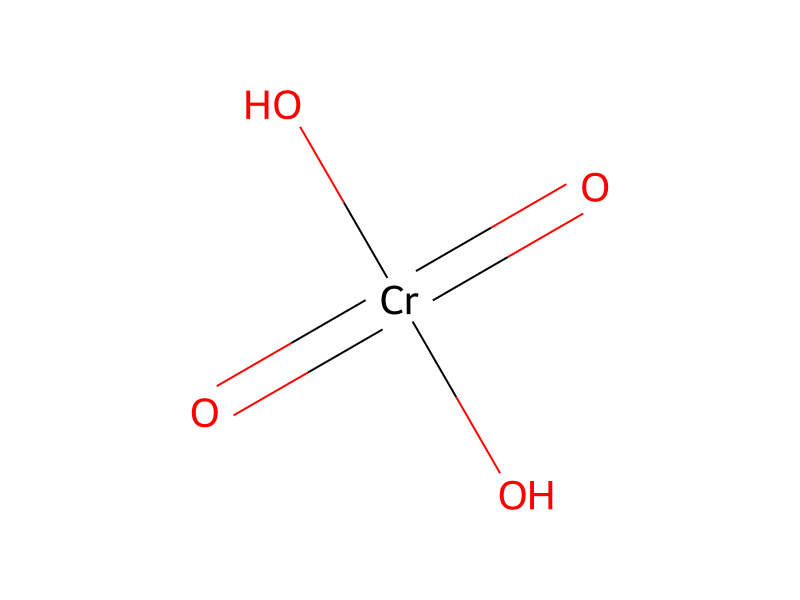
[CH2:1]([O:3][C:4]([CH:6]1[CH2:11][CH2:10][CH:9](O)[CH2:8][CH2:7]1)=[O:5])[CH3:2].S(=O)(=O)(O)O.O.[Cr](O)(O)(=O)=O>CC(C)=O>[CH2:1]([O:3][C:4]([CH:6]1[CH2:11][CH2:10][CH2:9][CH2:8][CH2:7]1)=[O:5])[CH3:2]Participants
Reactant 4



Product 1

Reagents, catalysts & solvents 1

Conditions
- Temperature
- 5 °C
Procedure
In 1 liter of acetone was dissolved 110 g (0.64 mole) of the resulting 4-ethoxycarbonylcyclohexanol, and the resulting solution was cooled to 5° C. or lower on an ice bath. To this solution was added dropwise a solution containing 69 ml of sulfuric acid, 80 g (0.8 mole) of chromic anhydride and 220 ml of water while the reaction temperature was controlled so as to be 15° C. or lower. The addition was stopped at the time when three quarters of the aforesaid chromic acid solution had been added. Then, in order to remove the surplus oxidant, 5 ml of isopropyl alcohol was added, and the resulting mixture was subjected to reaction at room temperature for 30 minutes. The supernatant was separated by decantation, after which the remaining solid was washed with two 300-ml portions of acetone, and the washings were combined with the supernatant. Next, the resulting solution was neutralized by use of a saturated aqueous solution of sodium hydrogencarbonate. The acetone solution was concentrated by means of a rotary evaporator and then distilled under reduced pressure to obtain 89 g (0.52 mole, yield: 81%) of 4-ethoxycarbonylcyclohexane having a boiling point of 95° to 97° C./2 mmHg.
Workup
- additionTo this solution was added dropwise a solution
- customto be 15° C.
- additionThe addition
- additionhad been added
- customThen, in order to remove the surplus oxidant, 5 ml of isopropyl alcohol
- additionwas added
- customthe resulting mixture was subjected to reaction at room temperature for 30 minutes
- customThe supernatant was separated by decantation
- washafter which the remaining solid was washed with two 300-ml portions of acetone
- concentrationThe acetone solution was concentrated by means of a rotary evaporator
- distillationdistilled under reduced pressure
Sources & evidence
- ORD record
- ord-e0e7e2c2b9cc4e58b71d28d640028e32
- Source dataset
- uspto-grants-1986_01
- Patent number
- US04565767
Reaction notes
Loading…