Water → 3-(N-n-Heptadecylcarbamoyl)oxypropan-1-ol
Reaction equation

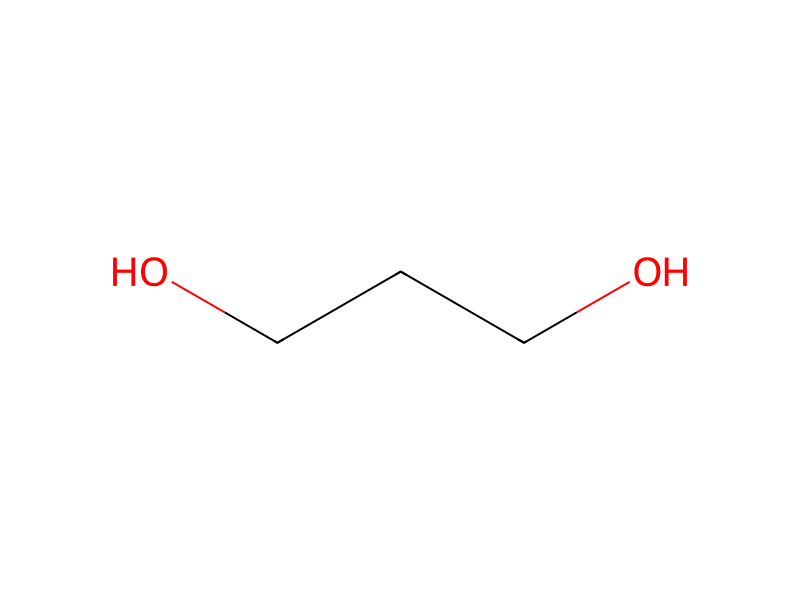
[CH2:1]([N:18]=[C:19]=[O:20])[CH2:2][CH2:3][CH2:4][CH2:5][CH2:6][CH2:7][CH2:8][CH2:9][CH2:10][CH2:11][CH2:12][CH2:13][CH2:14][CH2:15][CH2:16][CH3:17].O.C(Cl)(Cl)Cl.[CH2:26]([OH:30])[CH2:27][CH2:28][OH:29]>C(Cl)Cl>[CH2:1]([NH:18][C:19]([O:29][CH2:28][CH2:27][CH2:26][OH:30])=[O:20])[CH2:2][CH2:3][CH2:4][CH2:5][CH2:6][CH2:7][CH2:8][CH2:9][CH2:10][CH2:11][CH2:12][CH2:13][CH2:14][CH2:15][CH2:16][CH3:17]Participants
6
Reactant 4



Product 1

Reagents, catalysts & solvents 1

Procedure
In a mixture of 5.7 g of 1,3-propanediol and 30 ml of methylene chloride is dissolved 5.0 g of n-heptadecyl isocyanate and the mixture is stirred at room temperature overnight. To the reaction mixture are added 20 ml each of water and chloroform, and the organic layer is taken and concentrated to dryness. Then, silica gel column chromatography is carried out [eluent: chloroform-water (97:3)] and the eluate is concentrated to dryness. The procedure provides 3.0 g of the above-indicated compound as colorless crystals.
Workup
- concentrationconcentrated to dryness
- concentrationthe eluate is concentrated to dryness
Sources & evidence
- ORD record
- ord-e64f399b4ade4a0283755353372f0bfe
- Source dataset
- uspto-grants-1986_01
- Patent number
- US04565865
Reaction notes
Loading…