Acetic Anhydride → HCID 53922423, compound
Reaction equation

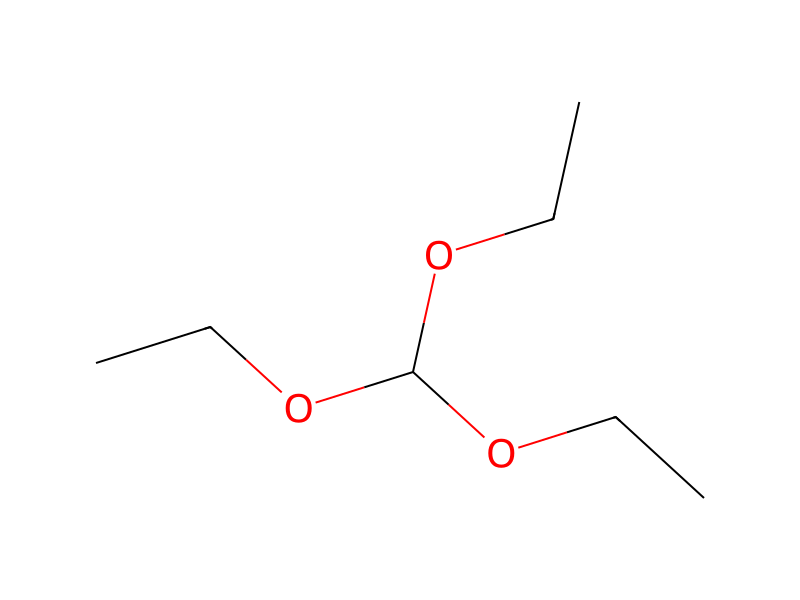
[Cl:1][C:2]1[C:15]([F:16])=[C:14]([F:17])[C:13]([Cl:18])=[C:12]([F:19])[C:3]=1[C:4]([CH2:6][C:7]([O:9][CH2:10][CH3:11])=[O:8])=[O:5].[CH:20](OCC)(OCC)[O:21][CH2:22][CH3:23].C(OC(=O)C)(=O)C>>[Cl:1][C:2]1[C:15]([F:16])=[C:14]([F:17])[C:13]([Cl:18])=[C:12]([F:19])[C:3]=1[C:4]([C:6](=[CH:20][O:21][CH2:22][CH3:23])[C:7]([O:9][CH2:10][CH3:11])=[O:8])=[O:5]Participants
4



Conditions
- Temperature
- 150 °C
Procedure
A mixture of 31.5 g (0.1 mol) of ethyl (2,5-dichloro-3,4,6-trifluorobenzoyl)-acetate, 22.2 g (0.15 mol) of triethyl orthoformate and 25.5 g (0.25 mol) of acetic anhydride is heated under reflux for 2 hours (heating bath temperature of 150° C.). Low-boiling constituents are distilled off first under a waterpump vacuum and then under a high vacuum up to a bottom temperature of 130° C. The residue is used further as crude product.
Workup
- temperatureis heated
- temperatureunder reflux for 2 hours
- distillationLow-boiling constituents are distilled off first under a waterpump vacuum
- customup to a bottom temperature of 130° C
Sources & evidence
- ORD record
- ord-bab83eb5dbfe4d5ba10795c671aa3dc4
- Source dataset
- uspto-grants-1995_11
- Patent number
- US05464796
Reaction notes
Loading…