Acetic acid 10-acetoxymethyl-anthracen-9-ylmethyl ester → Acrolein
Reaction equation

[CH3:1][C:2]([O:4][CH2:5][C:6]1[C:19]2[C:14](=[CH:15][CH:16]=[CH:17][CH:18]=2)[C:13]([CH2:20][O:21][C:22]([CH3:24])=[O:23])=[C:12]2[C:7]=1[CH:8]=[CH:9][CH:10]=[CH:11]2)=[O:3]>C(O)(=O)C>[CH:5]([CH:6]=[CH2:7])=[O:4].[CH3:24][C:22]([O:21][CH2:20][C:13]1[C:12]2[C:7](=[CH:8][CH:9]=[CH:10][CH:11]=2)[C:6]([CH2:5][O:4][C:2]([CH3:1])=[O:3])=[C:19]2[C:14]=1[CH:15]=[CH:16][CH:17]=[CH:18]2)=[O:23]Participants
Reactant 1
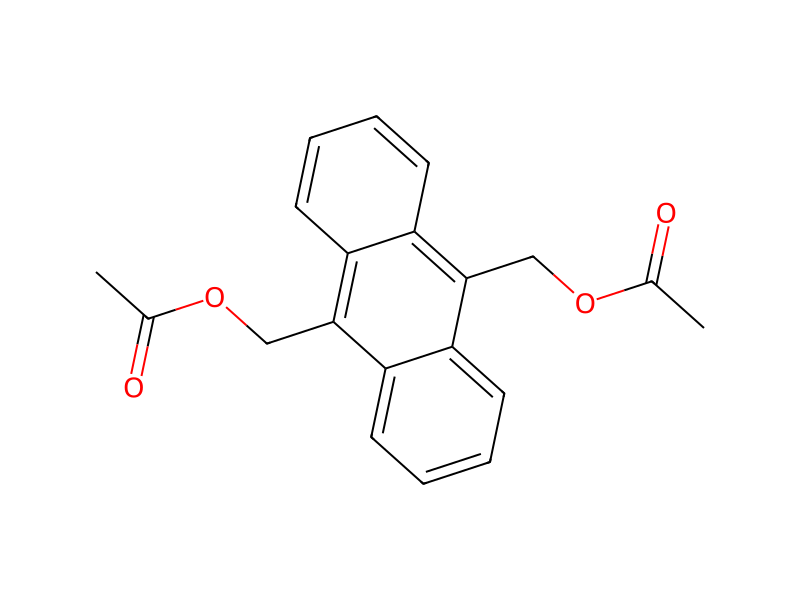
Product 2

Reagents, catalysts & solvents 1

Procedure
Another embodiment of the invention utilizing the same amine groups in similar manner is the addition of one or more amine of Group A to a CAA having a high (>2,000 ppm) level of acetic acid. This high acetic acid-containing CAA feed stream may be fed to an acetic add distillation column, that is, a distillation column used for effectively reducing, by its distillation, acetic acid from the CAA. Distillation of the Group A-treated CAA yields a low acrolein (also now low acetic add) CAA. (The Group A amine can be fed to the acetic acid removal column as a separate stream as the high acetic acid CAA is fed to the column.) Subsequently, the low acrolein CAA is fed to a final distillation column, i.e., a high purity acrylic acid distillation column, where the final distillation steps, previously described, are carried out.
Workup
- additionadd
- distillationdistillation column
- distillationa distillation column
- distillationfor effectively reducing, by its distillation, acetic acid from the CAA
- distillationDistillation of the Group
- additionA-treated CAA
Sources & evidence
- ORD record
- ord-7e740a55812f4c5ea46d2cbd9fad1134
- Source dataset
- uspto-grants-1998_05
- Patent number
- US05746892
Reaction notes
Loading…