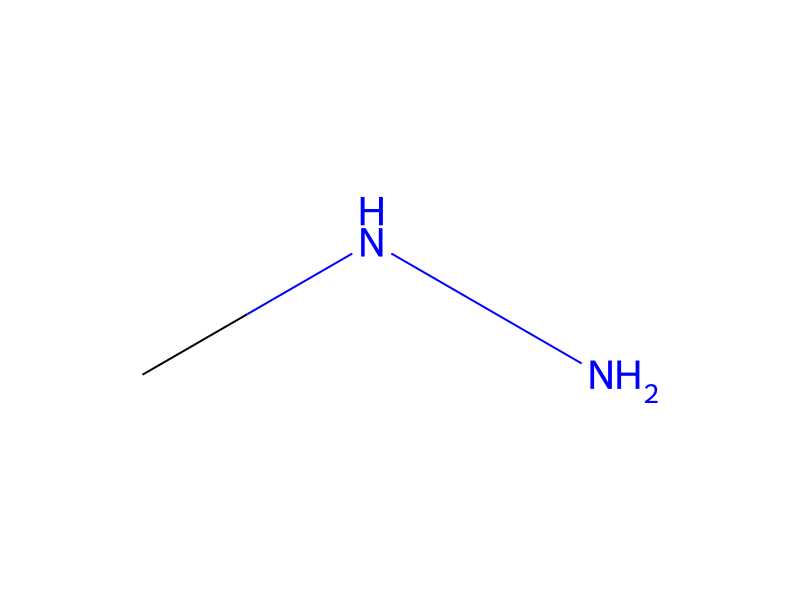
Methylhydrazine → HCID 136049327, compound
Reaction equation

[Br:1][C:2]1[CH:7]=[CH:6][C:5]([C:8]2[C:17](=O)[C:16]3[C:11](=[CH:12][C:13]([OH:20])=[C:14]([Cl:19])[CH:15]=3)[O:10][CH:9]=2)=[CH:4][CH:3]=1.[CH3:21][NH:22][NH2:23]>>[Br:1][C:2]1[CH:7]=[CH:6][C:5]([C:8]2[C:17]([C:16]3[CH:15]=[C:14]([Cl:19])[C:13]([OH:20])=[CH:12][C:11]=3[OH:10])=[N:23][N:22]([CH3:21])[CH:9]=2)=[CH:4][CH:3]=1Participants
3


Procedure
An ethanolic solution (5 ml) of 3-(4-Bromo-phenyl)-6-chloro-7-hydroxy-chromen-4-one (100 mg, 28 mmol) was heated to boiling, methyl hydrazine (0.30 ml, 20 equiv.) added in one portion, and refluxing continued for 16 hrs. After cooling, the volatiles were evaporated under reduced pressure and water added to the residue causing a precipitate to form. This was filtered off and dried under vacuum in the presence of P2O5 to provide 78 mg (73% yield) as a tan coloured powder. Although pure by LCMS further purification by column chromatography, eluting with first 40% EtOAc in Hexane and increasing to 60%, gave a grey-white powder (6 mg). The exact regioisomer was confirmed by NOESY 1H NMR.
Workup
- temperaturerefluxing
- temperatureAfter cooling
- customthe volatiles were evaporated under reduced pressure and water
- additionadded to the residue
- customto form
- filtrationThis was filtered off
- dry with materialdried under vacuum in the presence of P2O5
- customto provide 78 mg (73% yield) as a tan coloured powder
- customAlthough pure by LCMS further purification by column chromatography
- washeluting with first 40% EtOAc in Hexane
- temperatureincreasing to 60%
Sources & evidence
- ORD record
- ord-a85352ba80db4be6964f75ec523eec49
- Source dataset
- uspto-grants-2007_07
- Patent number
- US07247734B2
Reaction notes
Loading…