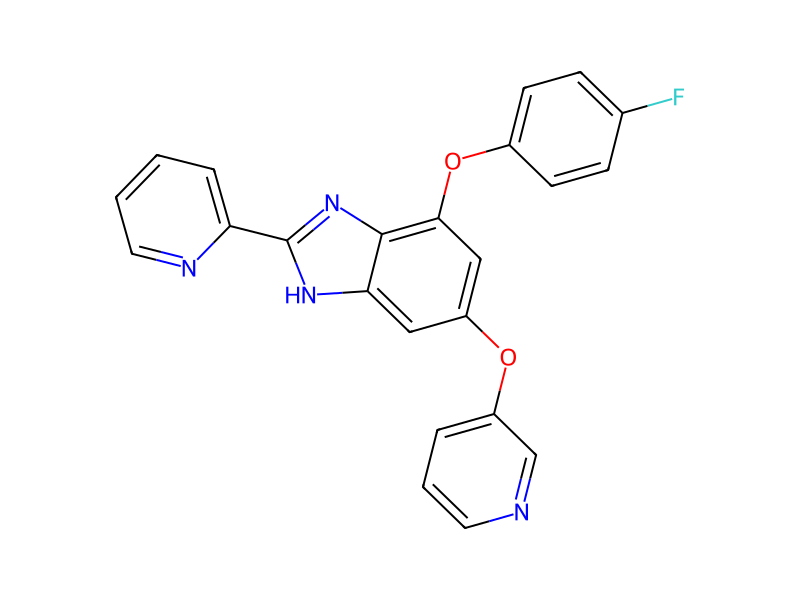
2-Pyrazinecarboxylic acid → 4-(4-Fluoro-phenoxy)-2-pyridin-2-yl-6-(pyridin-3-yloxy)-1H-benzimidazole
Reaction equation

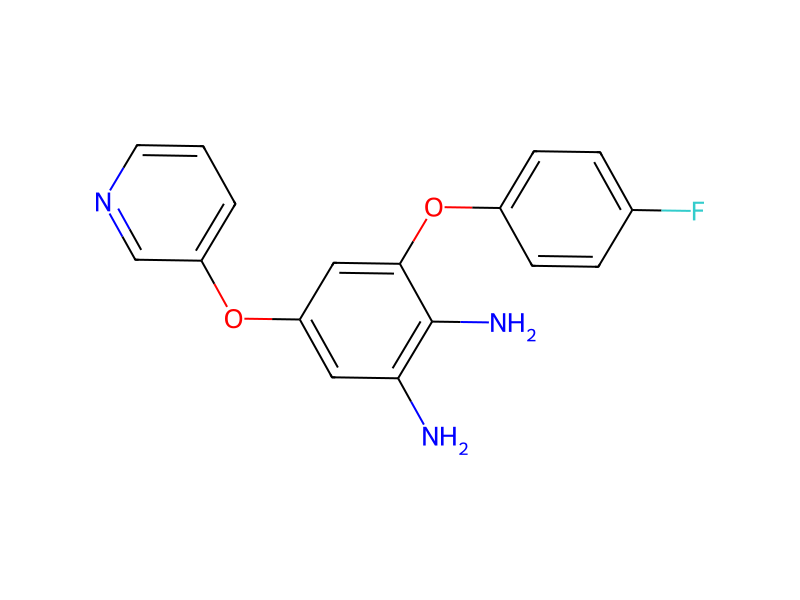
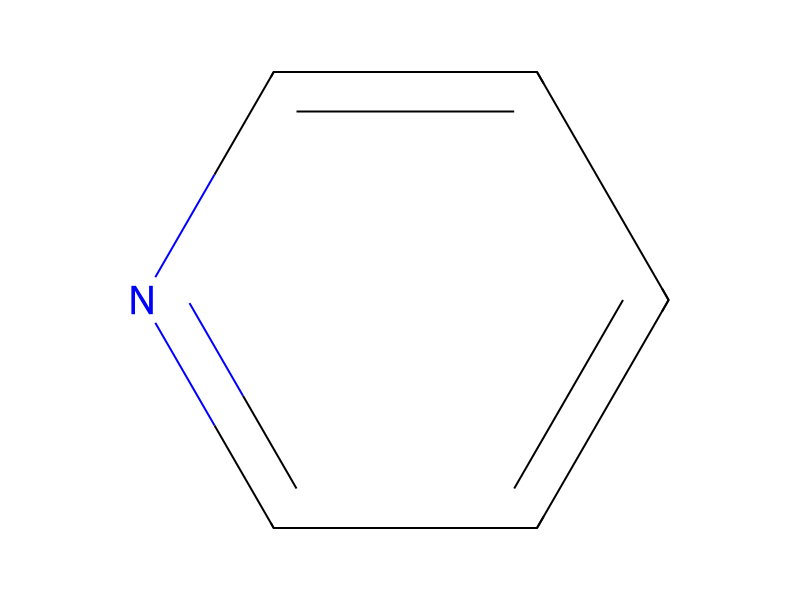
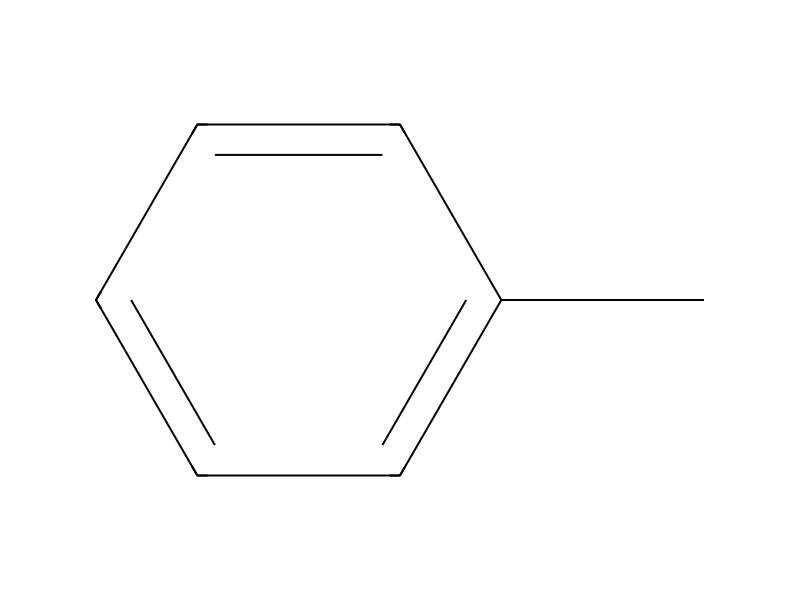
N1[CH:6]=[CH:5][N:4]=[CH:3][C:2]=1[C:7](O)=O.Cl.[CH2:11](N=C=NCCCN(C)C)C.[F:22][C:23]1[CH:44]=[CH:43][C:26]([O:27][C:28]2[CH:33]=[C:32]([O:34][C:35]3[CH:36]=[N:37][CH:38]=[CH:39][CH:40]=3)[CH:31]=[C:30]([NH2:41])[C:29]=2[NH2:42])=[CH:25][CH:24]=1.FC1C=CC(O)=CC=1.OC1C=NC=CC=1.O.C1(C)C=CC(S(O)(=O)=O)=CC=1>C1(C)C=CC=CC=1.C(OCC)(=O)C.N1C=CC=CC=1>[F:22][C:23]1[CH:44]=[CH:43][C:26]([O:27][C:28]2[C:29]3[N:42]=[C:7]([C:2]4[CH:11]=[CH:6][CH:5]=[CH:4][N:3]=4)[NH:41][C:30]=3[CH:31]=[C:32]([O:34][C:35]3[CH:36]=[N:37][CH:38]=[CH:39][CH:40]=3)[CH:33]=2)=[CH:25][CH:24]=1Participants
Reactant 6


Product 1
Reagents, catalysts & solvents 3
Procedure
18.6 mg of pyrazine-2-carboxylic acid and 57.5 mg of 1-ethyl-3-(3′-dimethylaminopropyl)-carbodiimide hydrochloride were added to a pyridine (2 ml) solution of 46.7 mg of 3-(4-fluorophenoxy)-5-(pyridin-3-yloxy)-benzene-1,2-diamine produced in the same manner as in Example 67 but using 4-fluorophenol and 3-hydroxypyridine, and the reaction liquid was stirred overnight, and then pyridine was evaporated away under reduced pressure. The residue was diluted with ethyl acetate, washed with water, and dried with anhydrous magnesium sulfate. The solvent was evaporated away under reduced pressure to obtain a mixture of amides as a yellow oily substance. The resulting mixture of amides was dissolved in 3 ml of toluene, and 28 mg of p-toluenesulfonic acid monohydrate was added to it, and the reaction liquid was stirred overnight at 120° C. The reaction liquid was diluted with ethyl acetate, washed with aqueous saturated sodium bicarbonate, and dried with anhydrous magnesium sulfate. The solvent was evaporated away under reduced pressure, and the resulting residue was purified through partitioning thin-layer chromatography (Kieselgel™ 60F254, Art 5744 (by Merck), chloroform/methanol=20/1) to obtain the entitled compound as a yellow solid.
Workup
- customproduced in the same manner as in Example 67
- customthe reaction liquid
- custompyridine was evaporated away under reduced pressure
- additionThe residue was diluted with ethyl acetate
- washwashed with water
- dry with materialdried with anhydrous magnesium sulfate
- customThe solvent was evaporated away under reduced pressure
- customto obtain
- customthe reaction liquid
- stirringwas stirred overnight at 120° C
- customThe reaction liquid
- washwashed with aqueous saturated sodium bicarbonate
- dry with materialdried with anhydrous magnesium sulfate
- customThe solvent was evaporated away under reduced pressure
- customthe resulting residue was purified
- customthrough partitioning thin-layer chromatography (Kieselgel™ 60F254, Art 5744 (by Merck), chloroform/methanol=20/1)
Sources & evidence
- ORD record
- ord-a85a286adeb14b4994ff41835eaf05ce
- Source dataset
- uspto-grants-2010_06
- Patent number
- US07728025B2
Reaction notes
Loading…