Pyridine → HCID 15725592, compound
Reaction equation

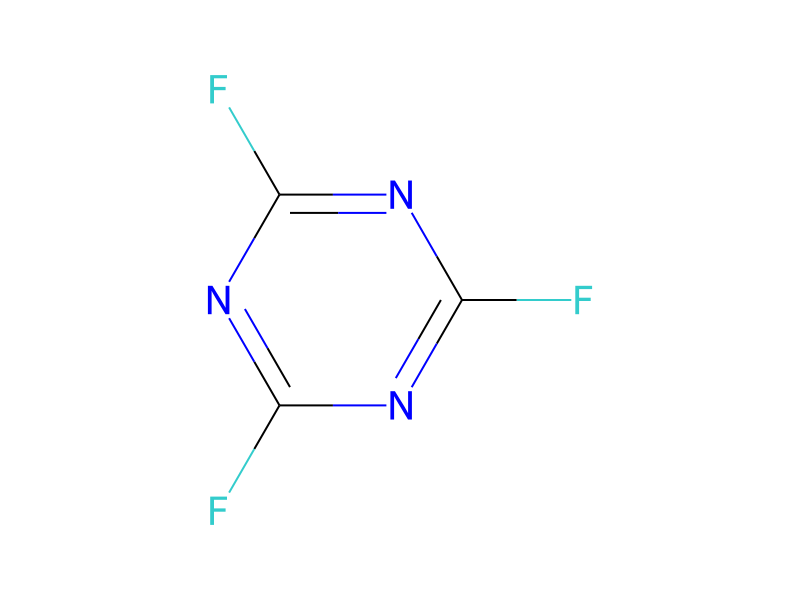
[CH2:1]([O:8][C:9]([NH:11][C@H:12]([C:17]([OH:19])=O)[CH2:13][CH:14]([CH3:16])[CH3:15])=[O:10])[C:2]1[CH:7]=[CH:6][CH:5]=[CH:4][CH:3]=1.N1C=CC=CC=1.N1C(F)=NC(F)=NC=1[F:28]>C(Cl)Cl>[CH2:1]([O:8][C:9]([NH:11][C@H:12]([C:17]([F:28])=[O:19])[CH2:13][CH:14]([CH3:16])[CH3:15])=[O:10])[C:2]1[CH:7]=[CH:6][CH:5]=[CH:4][CH:3]=1Participants
Reactant 3


Product 1

Reagents, catalysts & solvents 1

Conditions
- Temperature
- -5 °C
Procedure
To a stirred solution of N-benzyloxycarbonyl-L-leucine (0.50 g, 1.87 mmol) and pyridine (0.15 ml, 1.88 mmol) in anhydrous DCM (5 ml) kept under a N2 atmosphere was added cyanuric fluoride (0.51 ml, 5.64 mmol) at −15 to −10° C. A white precipitate formed. After stirring for 1 hr at −5° C., IR of the crude reaction mixture indicated formation of the acyl fluoride. After 2 hrs crushed ice was added along with DCM (10 ml). The organic layer was separated and the aqueous layer extracted with DCM (5 ml). The combined DCM layers were washed with ice-cold water (10 ml), dried (MgSO4) and concentrated under reduced pressure to afford a colourless oil (0.36 g, 73%) which was used in subsequent reactions without further purification: νmax(polyethylene card) 3317 (N—H), 1843 (acid fluoride); δH (200 MHz, CDCl3) 0.97 (6H, d, J 6.0, CH(CH3)2), 1.62–1.78 (3H, m, CH(CH3)2 & CH2CH(CH3)2), 4.54–4.61 (1H, m, NHCH), 5.02 (1H, m, NH), 5.14 (2H, s, CH2Ph), 7.36 (5H, s, Ar—H).
Workup
- customA white precipitate formed
- customIR of the crude reaction mixture
- customAfter 2 hrs crushed ice
- customThe organic layer was separated
- extractionthe aqueous layer extracted with DCM (5 ml)
- washThe combined DCM layers were washed with ice-cold water (10 ml)
- dry with materialdried (MgSO4)
- concentrationconcentrated under reduced pressure
Sources & evidence
- ORD record
- ord-cab23721293d45e49aeafbc0d14dfdc7
- Source dataset
- uspto-grants-2007_05
- Patent number
- US07223795B2
Reaction notes
Loading…