Isoprene → Triisopropyl(4-methyl-1,4-cyclohexadienyl)silane
Reaction equation

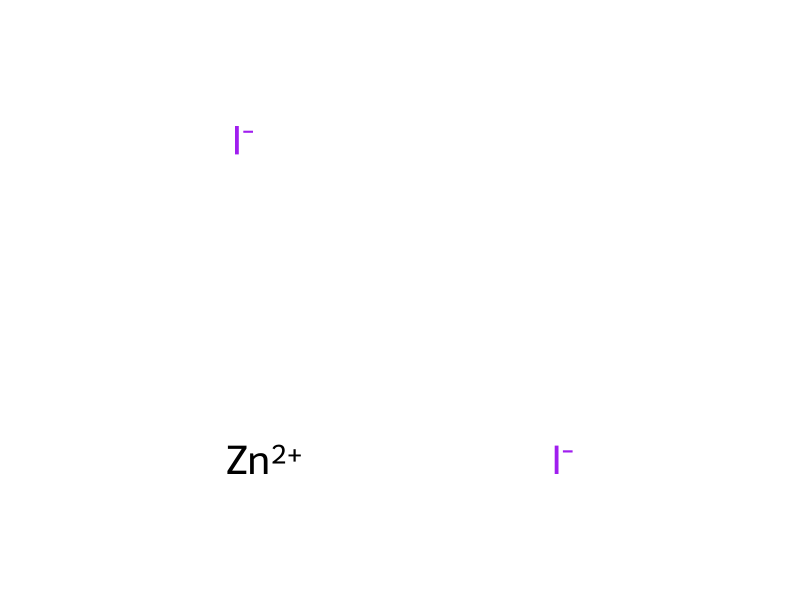
[CH2:1]=[CH:2][C:3](=[CH2:5])[CH3:4].[CH:6]([Si:9]([C:16]#[CH:17])([CH:13]([CH3:15])[CH3:14])[CH:10]([CH3:12])[CH3:11])([CH3:8])[CH3:7]>[Zn+2].[I-].[I-].C1(P(CC)C2C=CC=CC=2)C=CC=CC=1.ClCCl>[CH:13]([Si:9]([CH:6]([CH3:7])[CH3:8])([CH:10]([CH3:12])[CH3:11])[C:16]1[CH2:17][CH:5]=[C:3]([CH3:4])[CH2:2][CH:1]=1)([CH3:14])[CH3:15]Participants
6



Conditions
- Temperature
- 30 °C
Procedure
In a four-necked flask, 0.27 g (1.2 mmol) of CoBr2, 1.33 g (4.2 mmol) of ZnI2, 0.55 g (1.4 mmol) of diphenylphosphinoethane, and 60 ml of dichloromethane were added, and the mixture was stirred for 30 minutes at 30° C. Subsequently, 12.2 ml (122 mmol) of isoprene, 20 g (110 mmol) of triisopropylsilylacetylene, and 0.35 g (1.4 mmol) of Bu4NBH4 were added thereto, and the mixture was allowed to react for one hour at 30° C. Dichloromethane was evaporated, and then the residue was purified by silica gel flash column chromatography. Thus, 24.6 g of the title compound, triisopropyl(4-methyl-1,4-cyclohexadienyl)silane, was obtained at a yield of 89.7% (GC purity 80%).
Workup
- customto react for one hour at 30° C
- customDichloromethane was evaporated
- customthe residue was purified by silica gel flash column chromatography
Sources & evidence
- ORD record
- ord-bb2c301c7c3f43cfa8e230a5cc4b7f23
- Source dataset
- uspto-grants-2011_02
- Patent number
- US07880025B2
Reaction notes
Loading…