Pentanal → Cyclopentanone, 2-(1-hydroxypentyl)-
Reaction equation

[CH:1](=[O:6])[CH2:2][CH2:3][CH2:4][CH3:5].[OH-].[K+].[C:9]1(=[O:14])[CH2:13][CH2:12][CH2:11][CH2:10]1>[OH-].[Na+].C(=C1CCCC1=O)CCCC.O>[OH:6][CH:1]([CH:10]1[CH2:11][CH2:12][CH2:13][C:9]1=[O:14])[CH2:2][CH2:3][CH2:4][CH3:5]Participants
7

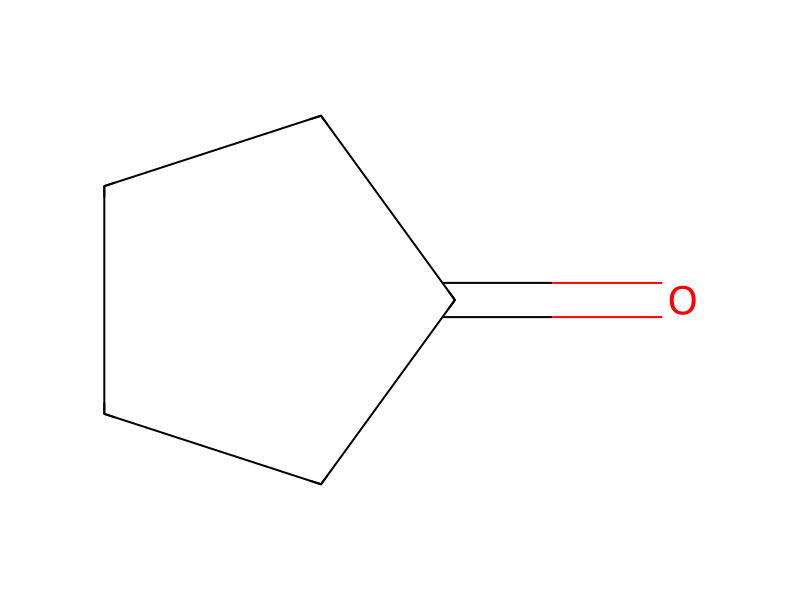





Conditions
- Temperature
- 15 °C
Procedure
Valeraldehyde having an acid value of 4.2 mg-KOH/g was used as the starting material. 719 g (8.55 mol) cyclopentanone, 320 g water and 3.5 g (0.042 mol) 48% NaOH were introduced into a 2-L four-necked flask, then the mixture was cooled to 15° C. under stirring, and 319 g (3.70 mol) valeraldehyde was added dropwise at the same temperature over 5 hours. Thereafter, the mixture was stirred at the same temperature for 2 hours. After the reaction was finished, the mixture was neutralized and analyzed in the same manner as in Example 1. The result indicated that the reaction mixture contained 557 g (3.27 mol) 2-(1-hydroxy-n-pentyl)cyclopentanone (yield 89.0%) and 6.8 g (0.044 mol) 2-pentylidene cyclopentanone.
Workup
- stirringThereafter, the mixture was stirred at the same temperature for 2 hours
Sources & evidence
- ORD record
- ord-aa9c6daedd024d518e8d307ba4f82d1f
- Source dataset
- uspto-grants-2007_01
- Patent number
- US07161041B2
Reaction notes
Loading…