Phenol → Cumene
Reaction equation

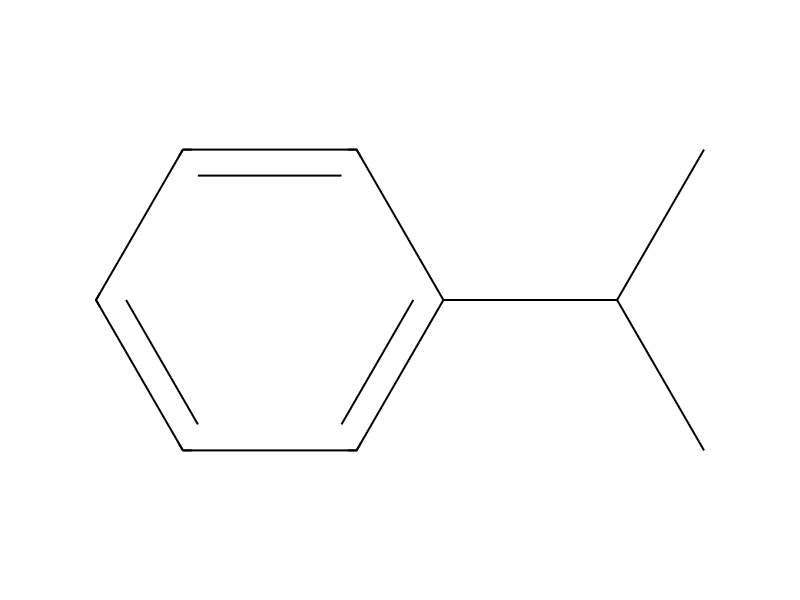
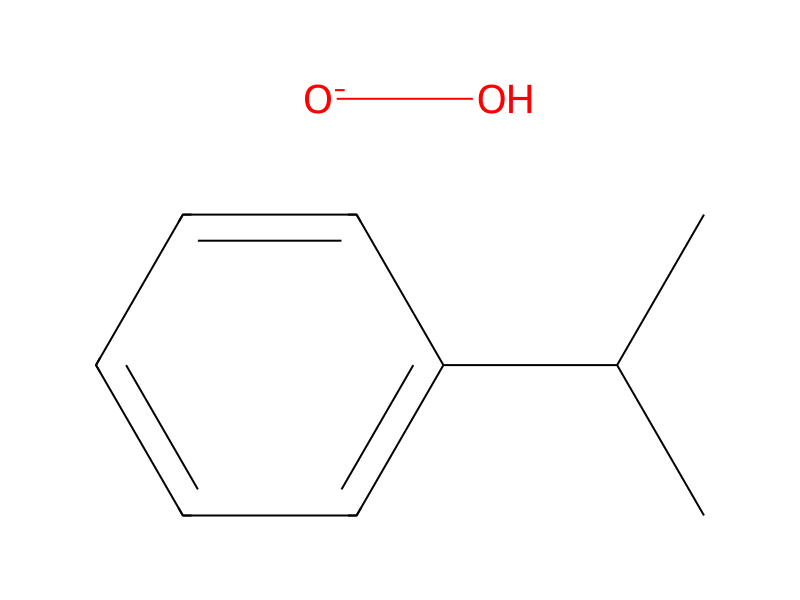
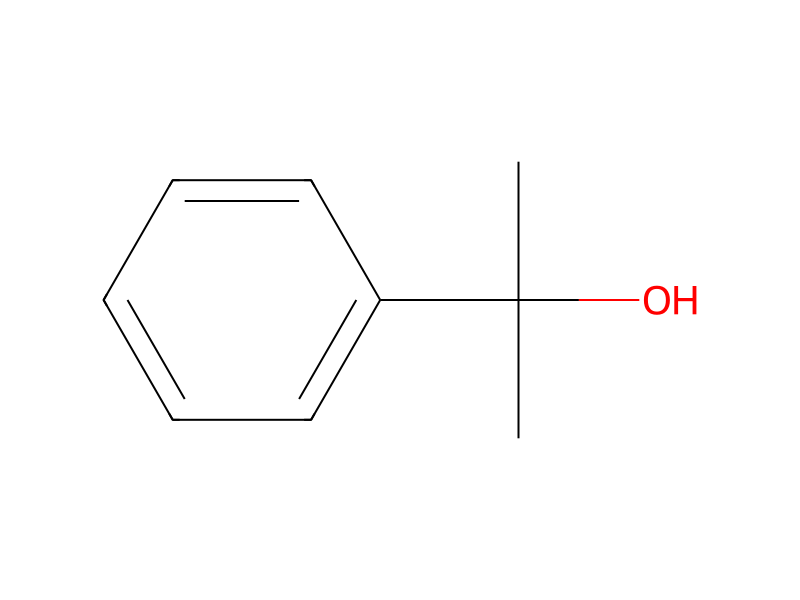
C1([OH:7])C=CC=CC=1.[C:8]1([CH:14]([CH3:16])[CH3:15])[CH:13]=[CH:12][CH:11]=[CH:10][CH:9]=1.[O-]O.[C:19]1([CH:25]([CH3:27])[CH3:26])[CH:24]=[CH:23][CH:22]=[CH:21][CH:20]=1>CC(C)=O>[C:8]1([CH:14]([CH3:16])[CH3:15])[CH:13]=[CH:12][CH:11]=[CH:10][CH:9]=1.[CH3:26][C:25]([CH3:27])([C:19]1[CH:24]=[CH:23][CH:22]=[CH:21][CH:20]=1)[OH:7].[C:14]([C:8]1[CH:13]=[CH:12][CH:11]=[CH:10][CH:9]=1)(=[O:7])[CH3:16]Participants
Reactant 3

Product 3

Reagents, catalysts & solvents 1

Procedure
Phenol is manufactured via air oxidation of cumene to cumene hydroperoxide (CHP), followed by acid-catalyzed cleavage of CHP to phenol and acetone. CHP decomposition is a very exothermic reaction which is normally carried out on a commercial scale in continuous stirred or back-mixed reactors. In such reactors only a small fraction of CHP remains at any given time and the reaction medium consists essentially of the products of decomposition of CHP, i.e., phenol and acetone, plus any solvent (e.g., cumene) and other materials added with CHP to the reactor. During cumene oxidation small amounts of dimethyl phenyl carbinol (DMPC) and acetophenone are also formed. In the presence of acid catalyst, DMPC dehydrates to AMS, a useful by-product. Very high yields of AMS can be obtained from pure DMPC, e.g., 98 percent yield upon dehydration over acidic silica at 300° C. In the presence of phenol, however, and more specifically in phenol/acetone/cumene which is solvent in decomposition of technical CHP/DMPC mixtures, the AMS yield is normally about 50–60 mol percent of the DMPC. Main by-products are AMS dimers and cumylphenol which have no commercial value. Formation of cumylphenol also reduces the phenol yield.
Workup
- customa very exothermic reaction which
- additionback-mixed reactors
Sources & evidence
- ORD record
- ord-5f5ff82ae678493fb338f735c3eaf698
- Source dataset
- uspto-grants-2007_01
- Patent number
- US07166752B2
Reaction notes
Loading…