L-Lysine → DL-Carnitine
Reaction equation

[OH:1][C@H:2]([CH2:8][C:9](=[O:11])[O-:10])[CH2:3][N+:4]([CH3:7])([CH3:6])[CH3:5].N[C@H](C(O)=O)CCCCN>N1C=CC=CC=1C([O-])=O.N1C=CC=CC=1C([O-])=O.N1C=CC=CC=1C([O-])=O.[Cr+3]>[OH:1][CH:2]([CH2:8][C:9](=[O:10])[O-:11])[CH2:3][N+:4]([CH3:7])([CH3:5])[CH3:6]Participants
Reactant 2
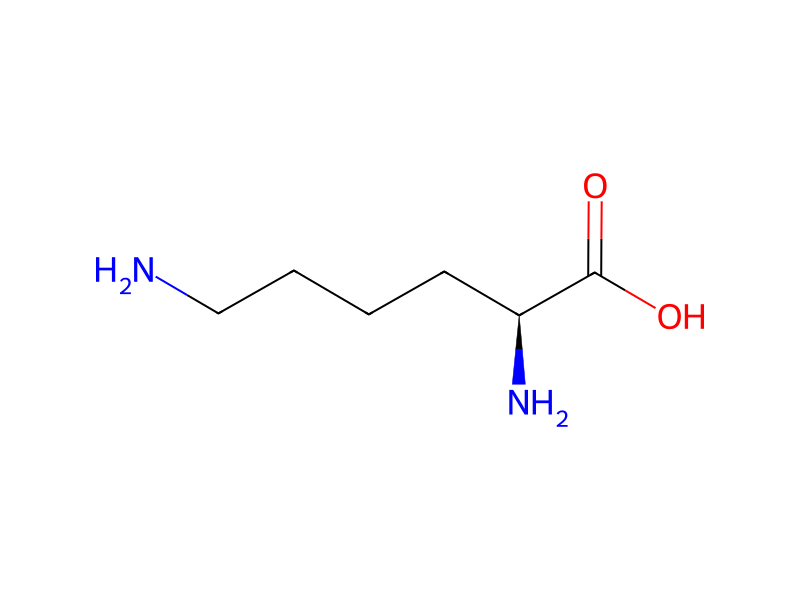
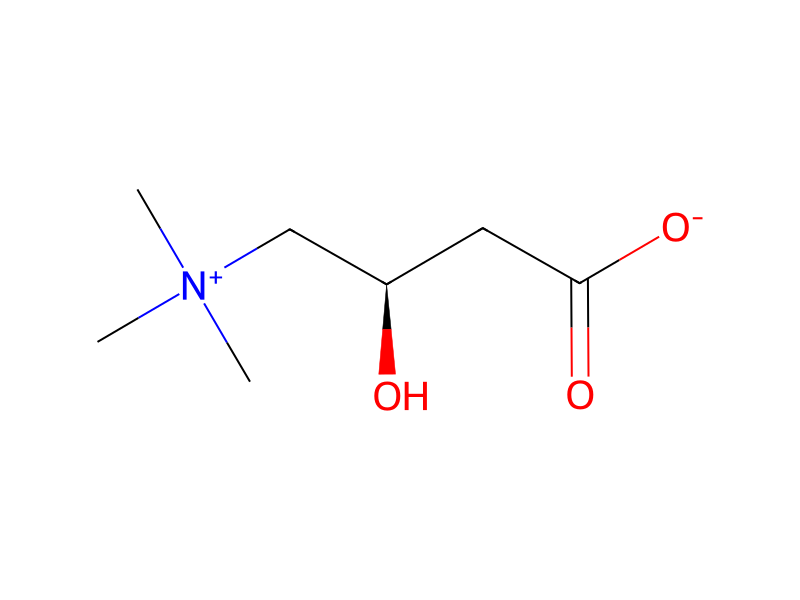
Product 1

Reagents, catalysts & solvents 1

Procedure
This experiment was conducted on a commercial 1,500 sow farrow-to-wean operation in central Kansas and used 599 sows (PIC Line C22). Experimental treatments were arranged in a 2×2 factorial with main effects of added L-carnitine (0 or 50 ppm) and chromium tris-picolinate (0 or 200 ppb). Sows were started on test on the first day of breeding. Each sow remained on the same treatment through gestation, lactation, and through a second gestation period (2 parities). During gestation, all sows were fed a grain sorghum-soybean meal-based diet formulated to contain 0.65% lysine, 0.83% Ca, and 0.76% P. In lactation, all sows were fed a grain sorghum-soybean meal based diet formulated to contain 1.10% lysine, 0.90% Ca, and 0.80% P (Table 3). Dietary treatments were provided via a corn-based top dress fed at 30 g/d. The top dress was formulated to provide 90 mg/d and 250 mg/d carnitine in gestation and lactation, respectively. Chromium tris-picolinate was provided at 360 mcg/d and 1,000 mcg/d during gestation and lactation, respectively. These inclusions were calculated to provide 50 mg/kg carnitine (CarniFeed, Lonza Inc., NJ) and 200 mcg/kg chromium (Chromapure, Lonza Inc., NJ) when sows were fed 4 lb/d of the gestation diet and 11 lb/d of the lactation diet. The top dress was added to the top of the feed box between meals in order to be consumed with the rest of the diet. The top dress was color-coded (1% dyed corncobs) by treatment to assure proper distribution of experimental treatments.
Workup
- customDietary treatments were provided via a corn-based top dress
Sources & evidence
- ORD record
- ord-9225a4b4da94489bba4f72b89bc80bcf
- Source dataset
- uspto-grants-2007_01
- Patent number
- US07169770B2
Reaction notes
Loading…