Oxetane, 3,3-bis(chloromethyl)- → HCID 53685635, compound
Reaction equation

[Na][Na].[CH2:3]([OH:8])[CH2:4][CH2:5][CH2:6][OH:7].Cl[CH2:10][C:11]1([CH2:15][Cl:16])[CH2:14][O:13][CH2:12]1>>[Cl:16][CH2:15][C:11]1([CH2:10][O:7][CH2:6][CH2:5][CH2:4][CH2:3][O:8][CH2:10][C:11]2([CH2:15][Cl:16])[CH2:14][O:13][CH2:12]2)[CH2:14][O:13][CH2:12]1Participants



Procedure
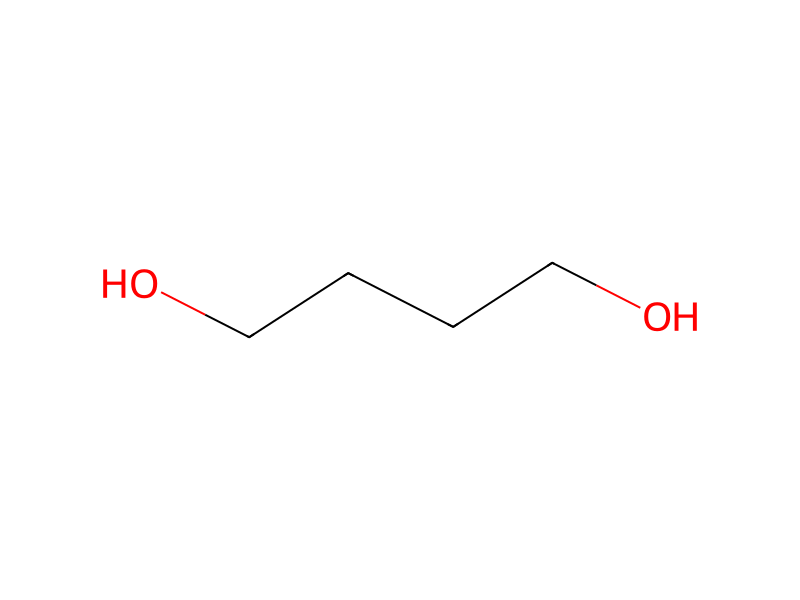
Reaction of the disodium salt of butane 1,4-diol with excess 3,3-bis-(chloromethyl)oxetane gives 1,4-bis-[(3-chloromethyl-3-oxetanyl)methyloxy]butane (10). This difunctional oxetane can be further substituted to give multioxetane compounds having various pendant groups. Substitution of the difunctional oxetane can be tailored so that the multioxetane compound can react with oxetane monomers having widely varying reactivity ratios. Reaction of 1,4-bis-[(3-chloromethyl-3-oxetanyl)methyloxy]-butane with sodium iodide gives 1,4-bis-[3-iodomethyl-3-oxetanyl)methyloxy]butane (11). Reaction of this diiodide with silver nitrate gives 1,4-bis-[(3-nitratomethyl-3-oxetanyl)methyloxy]butane (12), and with sodium azide it gives 1,4-bis-[(3-azidomethyl-3-oxetanyl)methyloxy]butane (13). ##STR10##
Sources & evidence
- ORD record
- ord-e82e416350aa4b338a2493575b182800
- Source dataset
- uspto-grants-1997_09
- Patent number
- US05663289
Reaction notes
Loading…