Diethyl Ether → (S)-2-(Acetylthio)-3-cyclohexylpropanoic acid
Reaction equation

[C:1]([O-:4])(=[S:3])[CH3:2].[K+].Br[C@H:7]([CH2:11][CH:12]1[CH2:17][CH2:16][CH2:15][CH2:14][CH2:13]1)[C:8]([OH:10])=[O:9].C1(NC2CCCCC2)CCCCC1.CCOCC>C(#N)C>[C:1]([S:3][C@@H:7]([CH2:11][CH:12]1[CH2:17][CH2:16][CH2:15][CH2:14][CH2:13]1)[C:8]([OH:10])=[O:9])(=[O:4])[CH3:2]Participants

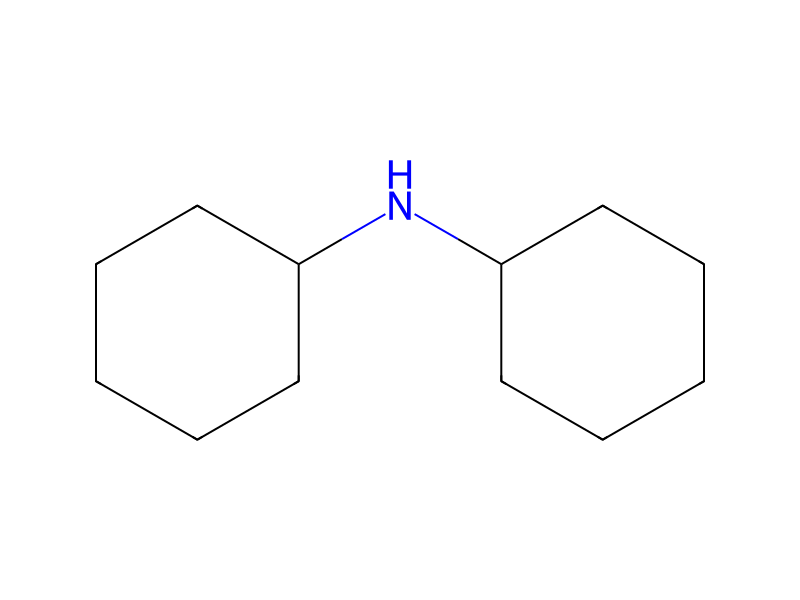



Procedure
To a stirred slurry of potassium thioacetate (1.07 g., 9.36 mmol.) in dry acetonitrile (15 ml.) at 0° C. under argon was added a solution of (R)-2-bromo-3-cyclohexylpropanoic acid (2.20 g., 9.36 mmol.) in acetonitrile (3 ml.) over 10 minutes. The reaction was warmed to room temperature and stirred 16 hours. The resulting slurry was filtered and evaporated. The residue was redissolved in ethyl acetate, washed once with 5% potassium bisulfate solution, dried (sodium sulfate) and evaporated. The oily yellow residue (2.21 g.) was dissolved in ether and treated with a solution of dicyclohexylamine (1.8 ml., 9.0 mmol.) in 5 ml. of ether. Scratching the flask surface with a glass rod provided 2.38 g. of white crystalline title product; m.p. 159°-161° C., [α]D =-41.2° (c=1.0, chloroform).
Workup
- filtrationThe resulting slurry was filtered
- customevaporated
- dissolutionThe residue was redissolved in ethyl acetate
- washwashed once with 5% potassium bisulfate solution
- dry with materialdried (sodium sulfate)
- customevaporated
- dissolutionThe oily yellow residue (2.21 g.) was dissolved in ether
- customprovided 2.38 g
Sources & evidence
- ORD record
- ord-5dc437da867441db8d1dbf343bd71618
- Source dataset
- uspto-grants-1997_09
- Patent number
- US05672599
Reaction notes
Loading…