Ethylenediamine → HCID 22917898, compound
Reaction equation

[CH2:1]([C:4]12[CH2:10][CH:7]([CH:8]=[CH:9]1)[CH:6]1[C:11]([O:13][C:14](=[O:15])[CH:5]21)=O)[CH:2]=[CH2:3].[CH2:16]([NH2:19])[CH2:17][NH2:18]>>[CH2:16]([N:19]1[C:11](=[O:13])[CH:6]2[CH:5]([C:4]3([CH2:1][CH:2]=[CH2:3])[CH2:10][CH:7]2[CH:8]=[CH:9]3)[C:14]1=[O:15])[CH2:17][N:18]1[C:11](=[O:13])[CH:6]2[CH:5]([C:4]3([CH2:1][CH:2]=[CH2:3])[CH2:10][CH:7]2[CH:8]=[CH:9]3)[C:14]1=[O:15]Participants
3
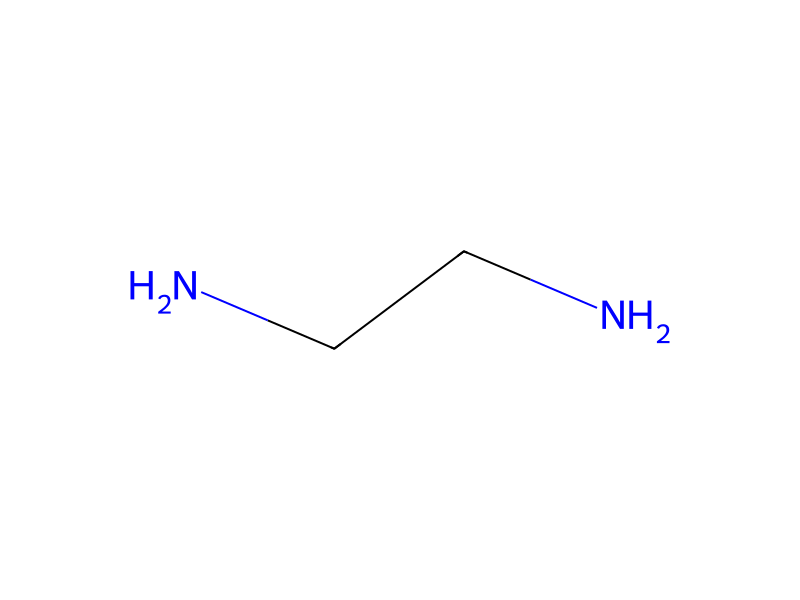


Conditions
- Temperature
- 180 °C
Procedure
204 g of allylbicyclo[2.2.1]hept-5-ene-2,3-dicarboxylic anhydride are initially taken and 30 g of ethylenediamine are added dropwise, with stirring. The temperature rises to 130° C. The temperature is increased to 180° C.; in the course of this 14 ml of water distil off. Heating is then continued for a further 2 hours at 200° C. and under a pressure of 9.3 Pa. This gives 210 g of a yellow resin, solid at room temperature and having a softening point of 56° C., measured on a Kofler heated stage.
Workup
- customrises to 130° C
- customin the course of this 14 ml of water distil off
- temperatureHeating
- customat room temperature
- customa softening point of 56° C.
- temperatureheated stage
Sources & evidence
- ORD record
- ord-252c9978b76541b5968ca35becdb051f
- Source dataset
- uspto-grants-1986_04
- Patent number
- US04579916
Reaction notes
Loading…