Water → HCID 178457773, compound
Reaction equation

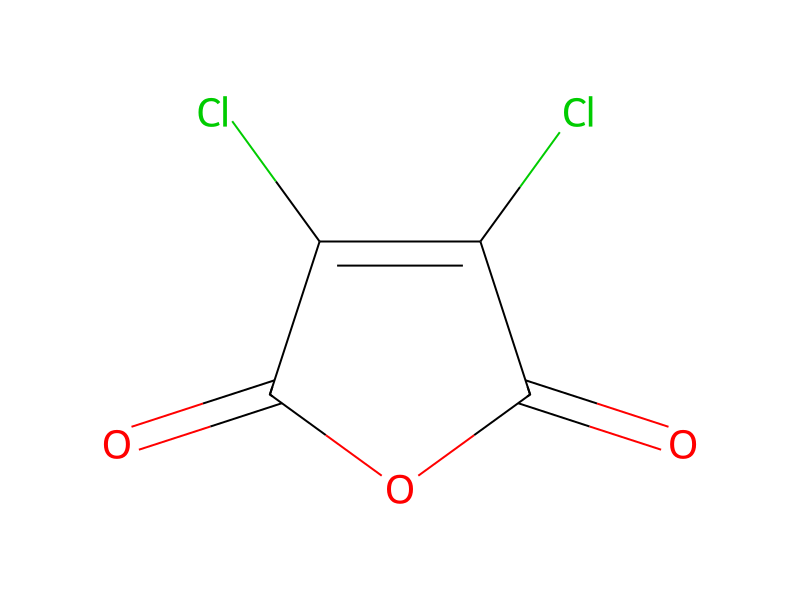
[Cl:1][C:2]1=[C:3]([Cl:9])[C:4]([O:6][C:7]1=[O:8])=[O:5].[CH3:10][CH:11]([CH2:14][C:15]1[CH:20]=[CH:19][C:18]([C:21]([CH3:24])([CH3:23])[CH3:22])=[CH:17][CH:16]=1)[CH2:12][NH2:13].O>C(O)(=O)C>[CH3:10][CH:11]([CH2:14][C:15]1[CH:16]=[CH:17][C:18]([C:21]([CH3:22])([CH3:24])[CH3:23])=[CH:19][CH:20]=1)[CH2:12][N:13]=[C:4]([OH:5])/[C:3](/[Cl:9])=[C:2](/[Cl:1])\[C:7]([OH:6])=[O:8]Participants
5
Reactant 3


Product 1

Reagents, catalysts & solvents 1

Procedure
16.7 g (0.1 mol) of dichloromaleic anhydride and 20.5 g (0.1 mol) of 2-methyl-3-(4-tert.-butylphenyl)-propylamine are stirred in 100 ml of glacial acetic acid under reflux for 4 hours. 100 ml of water are added, the oil which has separated out is extracted with methylene chloride, the methylene chloride phase is concentrated and the residue is recrystallized from ethanol. 14.6 g (41.2% of theory) of dichloromaleic acid N-[2-methyl-3-(4-tert.-butylphenyl)-propyl]-imide of melting point 64°-65° C. are obtained.
Workup
- temperatureunder reflux for 4 hours
- customthe oil which has separated out
- extractionis extracted with methylene chloride
- concentrationthe methylene chloride phase is concentrated
- customthe residue is recrystallized from ethanol
Sources & evidence
- ORD record
- ord-0757c7d5569f4122929dde6c4dc20450
- Source dataset
- uspto-grants-1986_04
- Patent number
- US04582849
Reaction notes
Loading…