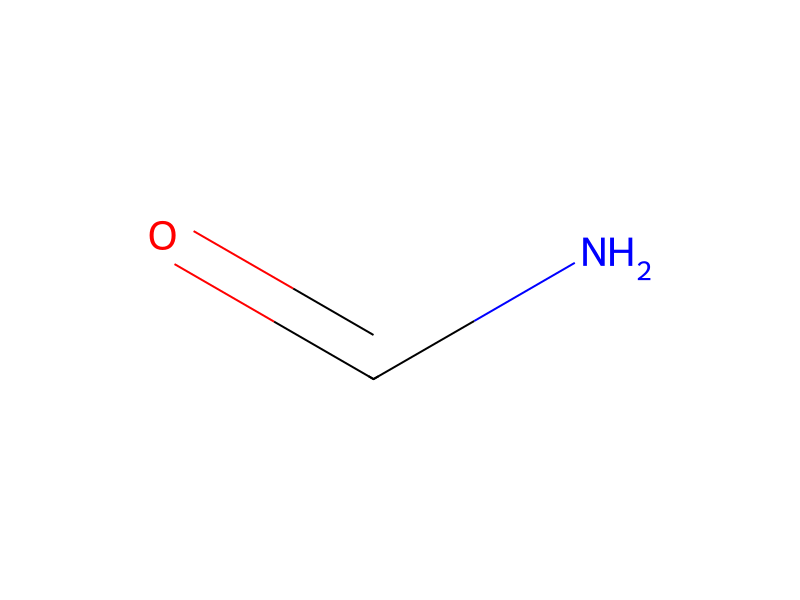
Formamide → HCID 178526029, compound
Reaction equation

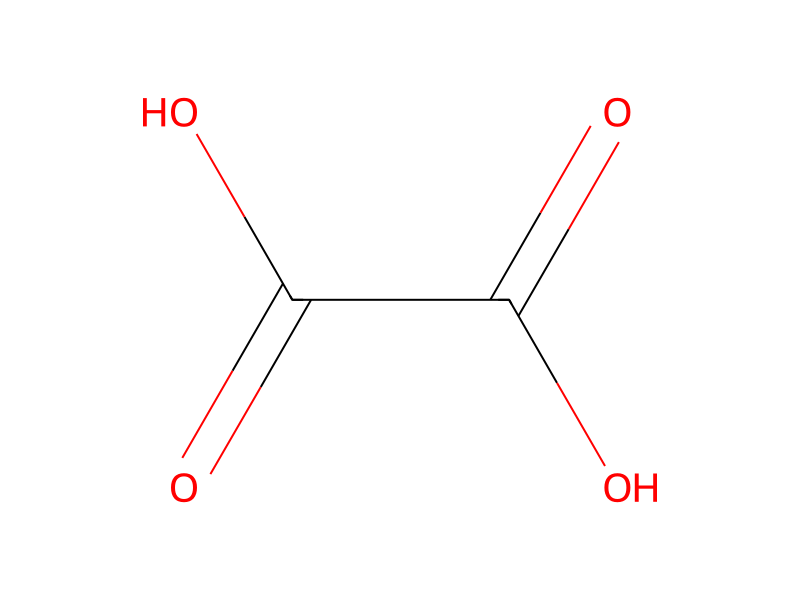
[O-2].[O-2].[O-2].[O-2].[O-2].[V+5:6].[V+5].[C:8]([OH:13])(=[O:12])[C:9]([OH:11])=[O:10].C(N)=O>O>[C:8]([O-:13])(=[O:12])[C:9]([O-:11])=[O:10].[V+5:6].[C:8]([O-:13])(=[O:12])[C:9]([O-:11])=[O:10].[C:8]([O-:13])(=[O:12])[C:9]([O-:11])=[O:10].[C:8]([O-:13])(=[O:12])[C:9]([O-:11])=[O:10].[C:8]([O-:13])(=[O:12])[C:9]([O-:11])=[O:10].[V+5:6]Participants
Reactant 3

Product 1

Reagents, catalysts & solvents 1

Procedure
To 40 ml of water is added 0.75 gram of vanadium pentoxide, 1.65 grams of oxalic acid and 3.75 grams of formamide at room temperature with stirring to form vanadium oxalate, and this solution was then mixed with 0.538 gram of Sb2O3 powder (which was first dispersed in 20 ml of water). The resulting mixture was heated with stirring at 65° C. to evaporate the majority of the water, followed by drying in an oven (101kPa) at 110° C. for 16 hours. The resulting solid was then calcined in a flowing oxygen gas stream at 450° C. for 2 hours, followed by crushing and screening to form -20+40 mesh particle size. The catalyst formed by the above impregnation procedure was determined by calculation (based on the vanadium salt, the antimony salt and the weight of the titanium dioxide particles) to contain 6.6 wt. % V2O5 and 4.8 wt. % Sb2O3 on the TiO2.
Sources & evidence
- ORD record
- ord-0c490dbcfb684c5cad7e1ba160169231
- Source dataset
- uspto-grants-1986_04
- Patent number
- US04582912
Reaction notes
Loading…