Phosgene → HCID 23324010, compound
Reaction equation

C(=O)=O.CC(C)=O.[CH3:8][C:9]1[CH:20]=[CH:19][CH:18]=[CH:17][C:10]=1[NH:11][CH2:12][CH2:13][C:14]([OH:16])=[O:15].[C:21](Cl)([Cl:23])=[O:22].Cl.CC1C=CC=CC=1NCCC(O)=O>C(Cl)Cl>[Cl:23][C:21]([N:11]([CH2:12][CH2:13][C:14]([OH:16])=[O:15])[C:10]1[CH:17]=[CH:18][CH:19]=[CH:20][C:9]=1[CH3:8])=[O:22]Participants
Reactant 4


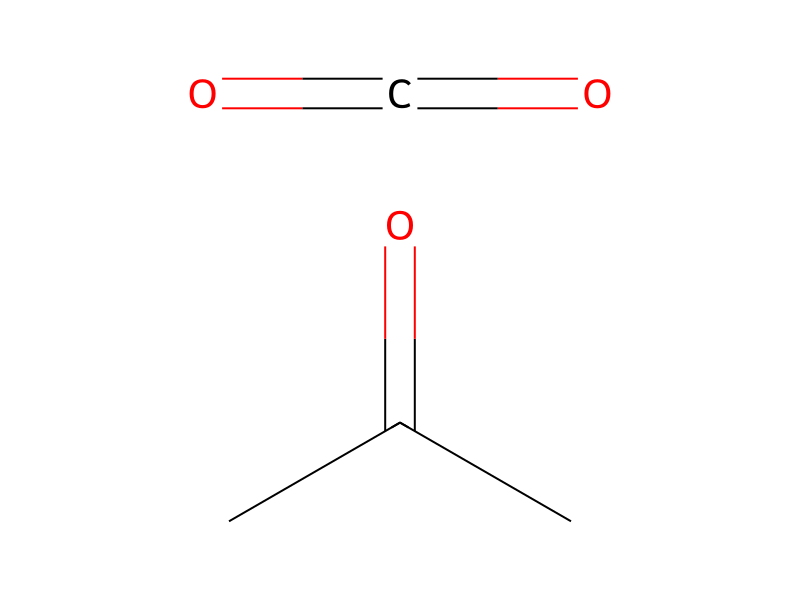

Product 1

Reagents, catalysts & solvents 1

Conditions
- Temperature
- 40 °C
Procedure
In a 100 cc round-bottomed flask equipped with magnetic stirring, a thermometer, a dry ice/acetone reflux condenser, a device for introducing gas and a dropping funnel, there is introduced 3-(2-methylanilino)propionic acid (5.29 g; 29.6 mmol) and methylene chloride (30 cc). The mixture maintained under an atmosphere of argon is heated to a temperature in the region of 40° C., and phosgene (5.20 g; 52.6 mmol) is then added with stirring in the course of 25 minutes, while maintaining the temperature between 36° C. and 40° C. During the introduction of phosgene, a white precipitate of 3-(2-methylanilino)propionic acid hydrochloride forms. The reaction mixture is heated to a temperature in the region of 40° C. for a further hour. The white precipitate is then almost completely dissolved. After cooling to 20° C. and the removal of the phosgene which has not reacted, the light precipitate which remains is separated by filtration. The filtrate is concentrated to dryness. N-Chloroformyl-3-(2-methylanilino)propionic acid (7 g) is thus obtained almost pure, m.p. 112° C., the structure of which is confirmed by the infrared spectrum, mass spectrum and proton nuclear magnetic resonance spectrum. The product, after recrystallisation in a toluene/hexane mixture (70:30 by volume), melts at 113° C.
Workup
- customIn a 100 cc round-bottomed flask equipped with magnetic stirring
- additiona device for introducing gas and a dropping funnel, there
- temperatureThe mixture maintained under an atmosphere of argon
- additionis then added
- temperaturewhile maintaining the temperature between 36° C. and 40° C
- dissolutionThe white precipitate is then almost completely dissolved
- temperatureAfter cooling to 20° C.
- customthe removal of the phosgene which
- customhas not reacted
- customthe light precipitate which remains is separated by filtration
- concentrationThe filtrate is concentrated to dryness
Sources & evidence
- ORD record
- ord-4837ea0be98a4789a5e84da25a5bdd42
- Source dataset
- uspto-grants-1986_04
- Patent number
- US04585867
Reaction notes
Loading…