(Triphenylphosphoranylidene)acetaldehyde → HCID 21273094, compound
Reaction equation

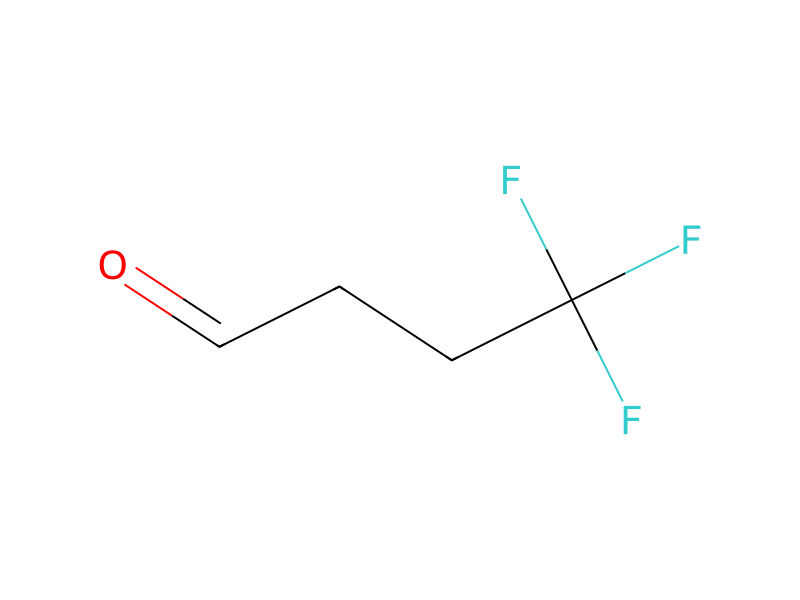
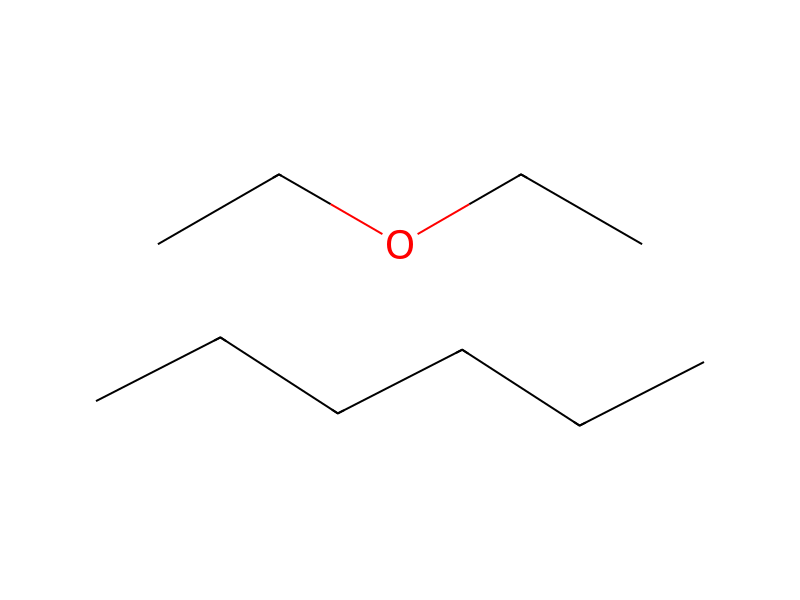
[F:1][C:2]([F:8])([F:7])[CH2:3][CH2:4][CH:5]=O.[CH:9]([CH:11]=P(C1C=CC=CC=1)(C1C=CC=CC=1)C1C=CC=CC=1)=[O:10].CCOCC.CCCCCC>ClCCl>[F:1][C:2]([F:8])([F:7])[CH2:3][CH2:4]/[CH:5]=[CH:11]/[CH:9]=[O:10]Participants
Reactant 3

Product 1

Reagents, catalysts & solvents 1

Procedure
A solution of 12.6 g (0.1 mol) of 4,4,4-trifluorobutanal [T. Fuchikami and I. Ojima, J. Am. Chem. Soc. 104, 3527 (1982)] and 30.4 g (0.1 mol) of formylmethylenetriphenylphosphorane (see Tripett and D. M. Walker, J. Chem. Soc. 1961, 1266] in 200 ml of dichloromethane is heated under reflux for 24 hours under argon. The red solution is freed of solvent at room temperature in vacuo, and the residue is stirred thoroughly with ether/hexane (1:1). The solid portion is filtered off and subsequently washed three times with ether/hexane (1:1). The filtrate is concentrated by evaporation in vacuo and the residue is chromatographed with dichloromethane on silica gel. The product is eluted in the second fraction (Rf =0.4). 6,6,6-Trifluoro-2-trans-hexenal is obtained in the form of a light-yellow oil.
Workup
- temperatureunder reflux for 24 hours under argon
- customis freed of solvent at room temperature in vacuo
- filtrationThe solid portion is filtered off
- washsubsequently washed three times with ether/hexane (1:1)
- concentrationThe filtrate is concentrated by evaporation in vacuo
- customthe residue is chromatographed with dichloromethane on silica gel
- washThe product is eluted in the second fraction (Rf =0.4)
Sources & evidence
- ORD record
- ord-44f74716a4f2443ca76cb8b65b631724
- Source dataset
- uspto-grants-1989_02
- Patent number
- US04808572
Reaction notes
Loading…