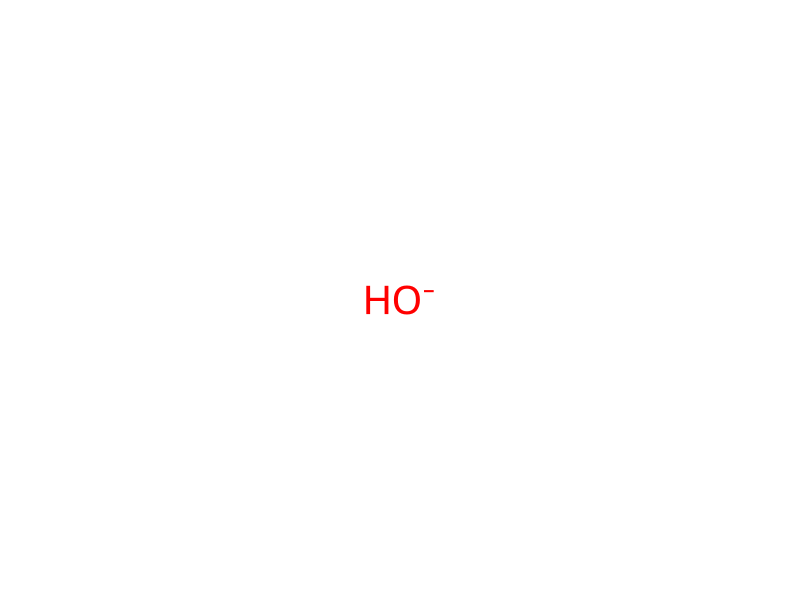
Hydroxide → 5-(4-Bromobutoxy)-1,2,3,4-tetrahydronaphthalene
Reaction equation

[C:1]1([OH:11])[C:10]2[CH2:9][CH2:8][CH2:7][CH2:6][C:5]=2[CH:4]=[CH:3][CH:2]=1.[OH-].[Br:13][CH2:14][CH2:15][CH2:16][CH2:17]Br>C(Cl)Cl.O.S(=O)(=O)(O)[O-].C([N+](CCCC)(CCCC)CCCC)CCC>[Br:13][CH2:14][CH2:15][CH2:16][CH2:17][O:11][C:1]1[CH:2]=[CH:3][CH:4]=[C:5]2[C:10]=1[CH2:9][CH2:8][CH2:7][CH2:6]2Participants
Reactant 3


Product 1

Reagents, catalysts & solvents 3



Procedure
A solution of 5,6,7,8-tetrahydronaphthalen-1-ol (4.2 g, 0.028 mol) in methylene chloride (50 ml) was mixed with a solution of sodum hydroxide (2.3 g, 0.0575 mol) in water (50 ml). After adding tetra-n-butylammonium bisulfate (9.6 g, 0.028 mol) and 1,4-dibromobutane (31 g, 0.14 mol), the reaction mixture was refluxed with vigorous stirring for 2 hrs. The reaction was cooled to room temperature, the layers separated and the organic phase washed with saturated sodium chloride solution. After drying over sodium sulfate, the organic phase was concentrated on the rotary evaporator and the residual oil heated under vacuum (0.1 mm Hg) to remove remaining 1,4-dibromobutane. The residue was chromatographed on silica gel using 100% hexane as eluent to give 8.1 g (71%) of the title compound as an oil.
Workup
- temperaturethe reaction mixture was refluxed
- customthe layers separated
- washthe organic phase washed with saturated sodium chloride solution
- dry with materialAfter drying over sodium sulfate
- concentrationthe organic phase was concentrated on the rotary evaporator
- temperaturethe residual oil heated under vacuum (0.1 mm Hg)
- customto remove
- customThe residue was chromatographed on silica gel using 100% hexane as eluent
Sources & evidence
- ORD record
- ord-98adefce115d43558537414de761415b
- Source dataset
- uspto-grants-1989_02
- Patent number
- US04808729
Reaction notes
Loading…