Pyridine → 1-(3-Bromopropyl)-3-phenoxybenzene
Reaction equation

[O:1]([C:8]1[CH:9]=[C:10]([CH2:14][CH2:15][CH2:16]O)[CH:11]=[CH:12][CH:13]=1)[C:2]1[CH:7]=[CH:6][CH:5]=[CH:4][CH:3]=1.N1C=CC=CC=1.P(Br)(Br)[Br:25]>C(OCC)C>[O:1]([C:8]1[CH:9]=[C:10]([CH2:14][CH2:15][CH2:16][Br:25])[CH:11]=[CH:12][CH:13]=1)[C:2]1[CH:7]=[CH:6][CH:5]=[CH:4][CH:3]=1Participants
Reactant 3

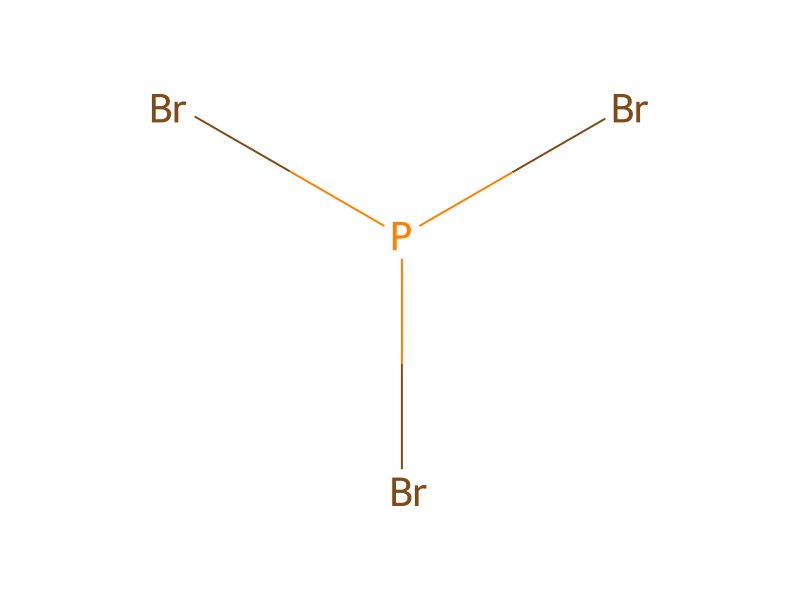

Product 1

Reagents, catalysts & solvents 1

Conditions
- Temperature
- 0 °C
Procedure
To a mixture of 21.0 grams (0.092 mole) of 3-(3-phenoxyphenyl)propanol and 1 mL of pyridine which had been cooled to 0° C. was added dropwise during a 20 minute period 8.27 grams (0.031 mole) of phosphorus tribromide. This mixture was stirred at 0° C. for 90 minutes and then at ambient temperature overnight. The reaction mixture was then diluted with 200 mL of diethyl ether, and the solution was washed successively twice with 50 mL of water, four times with 25 mL of a saturated, aqueous solution of sodium bicarbonate, once with 50 mL of water, and once with an aqueous solution of sodium chloride. After being dried over anhydrous sodium sulfate and filtered, the solvent was evaporated under reduced pressure, leaving 18.9 grams of 3-(3-phenoxyphenyl)propyl bromide as an oil. The nmr spectrum was consistent with the proposed structure.
Workup
- customat ambient temperature
- customovernight
- washthe solution was washed successively twice with 50 mL of water, four times with 25 mL of a saturated, aqueous solution of sodium bicarbonate
- dry with materialAfter being dried over anhydrous sodium sulfate
- filtrationfiltered
- customthe solvent was evaporated under reduced pressure
Sources & evidence
- ORD record
- ord-f67da82899fb4f9bb23e99d32bed1ec9
- Source dataset
- uspto-grants-1989_02
- Patent number
- US04808762
Reaction notes
Loading…