Sodium Hydroxide → 6-Bromo4-(3-ethoxy-phenyl)-2-methoxy-quinoline
Reaction equation

[Br:1][C:2]1[CH:3]=[C:4]2[C:9](=[CH:10][CH:11]=1)[NH:8][C:7](=[O:12])[CH:6]=[C:5]2[C:13]1[CH:18]=[CH:17][CH:16]=[C:15]([O:19][CH2:20][CH3:21])[CH:14]=1.F[B-](F)(F)F.[CH3:27][O+](C)C.[OH-].[Na+]>ClC(Cl)C>[Br:1][C:2]1[CH:3]=[C:4]2[C:9](=[CH:10][CH:11]=1)[N:8]=[C:7]([O:12][CH3:27])[CH:6]=[C:5]2[C:13]1[CH:18]=[CH:17][CH:16]=[C:15]([O:19][CH2:20][CH3:21])[CH:14]=1Participants
5




Procedure
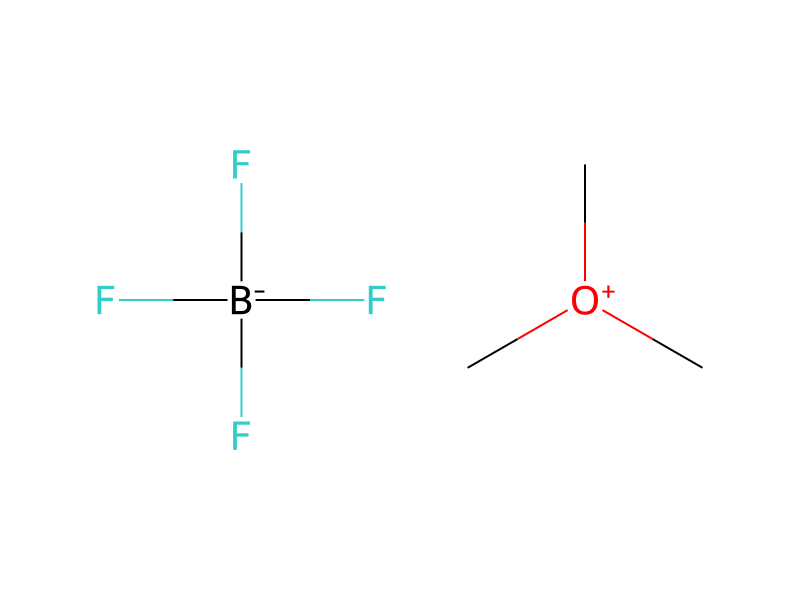
To a suspension of 6-bromo-4-(3-ethoxy-phenyl)-1H-quinolin-2-one (7.4 g, 21.5 mmol) in 60 ml dichloroethane was added trimethyloxonium tetrafluoroborate (BF4OMe3, 3.66 g, 24.7 mmol). The resulting mixture was stirred at ambient temperature overnight. After cooling to 0 C, was added 60 ml of 10% aqueous NaOH dropwise. The reaction mixture was stirred for another six hours at ambient temperature. It was then partitioned between dichloromethane and water. The organic layer was washed brine, dried over MgSO4, filtered and concentrated under vacuum to give an off-white solid. The solid was chromatographed on flash silica gel eluting with dichoromethane to yield the titled compound of 23A as a white solid (4.48 g, 58% yield).
Workup
- temperatureAfter cooling to 0 C
- stirringThe reaction mixture was stirred for another six hours at ambient temperature
- customIt was then partitioned between dichloromethane and water
- washThe organic layer was washed brine
- dry with materialdried over MgSO4
- filtrationfiltered
- concentrationconcentrated under vacuum
- customto give an off-white solid
- customThe solid was chromatographed on flash silica gel eluting with dichoromethane
Sources & evidence
- ORD record
- ord-fdb4f96527c44bb18d83c2294ca947f1
- Source dataset
- uspto-grants-2001_07
- Patent number
- US06258824B1
Reaction notes
Loading…